THE MET
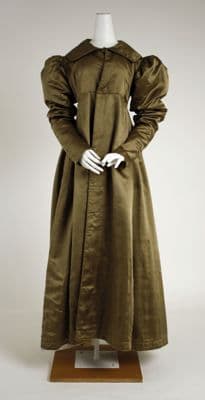
Olive Green Silk Taffeta A-Line Pelisse Coat
Empire / Regency · 1810s · American
Production
handmade
Material
silk taffeta
Culture
American
Influences
neoclassical silhouette · military-inspired collar
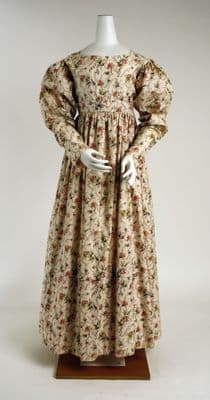
This Empire period pelisse displays the characteristic high-waisted silhouette with a fitted bodice that extends into a long, full skirt reaching the ankles. The olive-green silk taffeta creates a lustrous surface that catches light subtly. The garment features a standing collar and appears to have a double-breasted front closure with covered buttons. The sleeves are fitted through the arm with slight gathering at the shoulder, typical of the period's neoclassical influence. The coat's construction shows careful tailoring with princess seaming that creates the smooth fit through the torso before releasing into the flowing skirt. This outer garment would have been worn over day dresses for warmth and propriety during the Regency era.
coata-linehigh neckfloor length
Connected To
Worn with·chemiseWorn with·petticoatWorn with·stays
SHARED70 years · cross-category
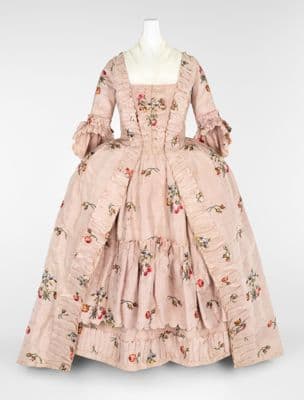
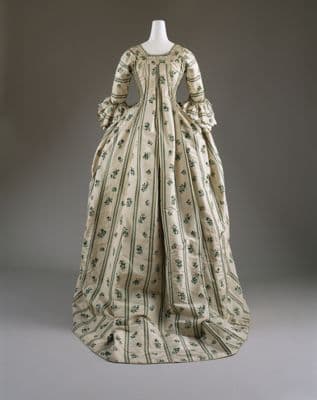
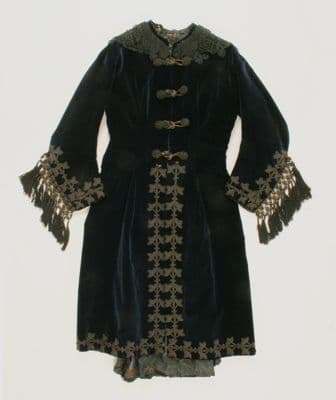
These two coats trace the evolution of masculine tailoring's influence on women's outerwear across seven decades of American fashion. The earlier rococo robe borrows its military-inspired frogging and fitted torso from men's formal coats, while the Empire-era pelisse takes the more radical step of adopting an actual masculine silhouette — those dramatically puffed sleeves and high-waisted, A-line cut mirror the Romantic ideal of the Byron-era dandy.
Echoes Across Time
Rococo → Empire / Regency · 70yr61%
SHARED
These two coats trace the evolution of masculine tailoring's influence on women's outerwear across seven decades of American fashion. The earlier rococo robe borrows its military-inspired frogging and fitted torso from men's formal coats, while the Empire-era pelisse takes the more radical step of adopting an actual masculine silhouette — those dramatically puffed sleeves and high-waisted, A-line cut mirror the Romantic ideal of the Byron-era dandy.
Worn with·chemiseWorn with·petticoatWorn with·stays
Pull the Thread→
Follow this garment wherever the graph leads