THE MET
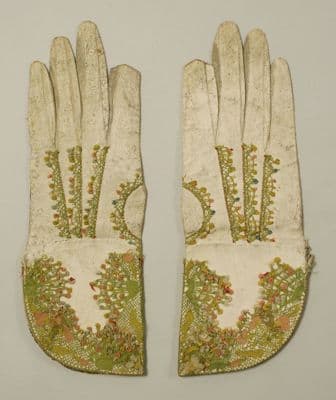
Cream Leather Mitts with Gold Green Embroidery
Baroque · 1700s · British
Production
handmade
Material
leather
Culture
British
Influences
French court fashion · rococo decorative arts
These are fingerless leather mitts with elaborate metallic embroidery covering the back of the hands and extending up the wrists. The cream-colored leather base is decorated with intricate gold thread embroidery forming scrolling floral and foliate patterns. Small coral-pink silk accents appear within the embroidered motifs. The embroidery work is dense and raised, creating a rich textural surface typical of 18th-century luxury accessories. The mitts extend to mid-forearm length with shaped cuffs that would have been worn over dress sleeves. The construction shows precise tailoring to fit the hand's contours while leaving fingers free for delicate tasks like needlework or handling fans.
glovewrist-length
Connected To
76%
Influences·French court fashionInfluences·rococo decorative artsTechnique·hand-embroidery
SHARED170 years · cross-category
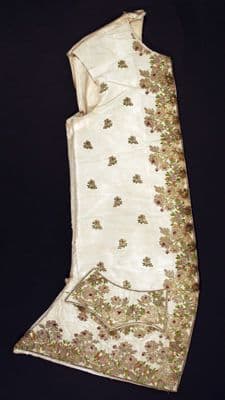
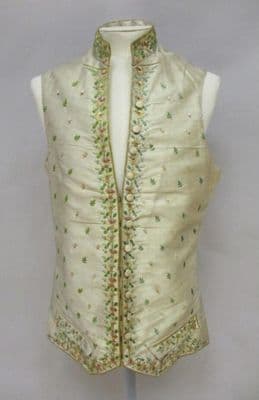
These gloves and waistcoat speak the same decorative language across nearly two centuries, both channeling the French court's obsession with botanical embroidery that made luxury synonymous with nature rendered in gold thread. The gloves' sinuous vine work climbing from cuff to fingertip finds its echo in the waistcoat's disciplined floral sprigs marching down the button band, though the Victorian piece has traded Baroque exuberance for the era's more contained formality.
Text64%
Image73%
69%
Worn with·chemiseWorn with·gownWorn with·staysTechnique·hand-embroidery
Influences·rococo decorative arts
SHARED50 years · cross-culture · cross-category
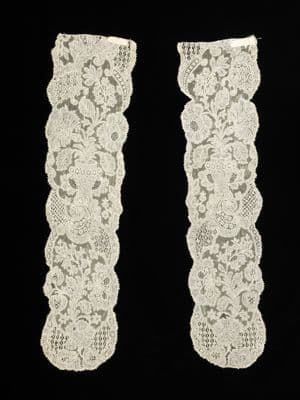
These pieces reveal how the same decorative DNA migrated across borders and decades, from the intricate botanical motifs worked in gold thread on those English leather gloves to the flowering vines that dance through the Flemish bobbin lace trim. Both deploy the sinuous, naturalistic ornament that defined 18th-century taste—those curling tendrils and scattered blooms that made even the most functional accessories feel like portable gardens.
Influences·French court fashionTechnique·hand-embroidery
SHARED50 years · cross-culture · cross-category
These pieces share the Rococo obsession with nature transformed into ornament, but one whispers while the other shouts. The waistcoat's delicate scattered sprigs—those tiny golden blooms dotting the cream silk like confetti—speak the same decorative language as the mitts' bold paisley swirls, but with completely different volume control.
Echoes Across Time
Baroque → Victorian Late / Bustle · 170yr76%
SHARED
These gloves and waistcoat speak the same decorative language across nearly two centuries, both channeling the French court's obsession with botanical embroidery that made luxury synonymous with nature rendered in gold thread. The gloves' sinuous vine work climbing from cuff to fingertip finds its echo in the waistcoat's disciplined floral sprigs marching down the button band, though the Victorian piece has traded Baroque exuberance for the era's more contained formality.
Influences·French court fashionInfluences·rococo decorative artsTechnique·hand-embroidery
Pull the Thread→
Follow this garment wherever the graph leads