THE MET
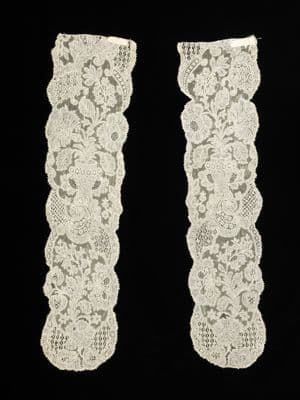
Cream Linen Bobbin Lace Lappet Trim
Rococo · 1750s · Flemish
Production
handmade
Material
linen bobbin lace
Culture
Flemish
Influences
Flemish bobbin lace tradition · rococo decorative arts
Two matching strips of Flemish bobbin lace featuring intricate floral and foliate motifs worked in cream-colored linen thread. The lace displays characteristic rococo asymmetrical scrollwork with naturalistic flowers, leaves, and curving stems creating an elaborate pattern against an open mesh ground. Each lappet measures approximately twelve inches in length with scalloped edges and demonstrates the fine craftsmanship of mid-18th century Flemish lacemakers. The delicate openwork construction shows varying densities of thread, creating depth and shadow within the botanical designs. These would have been sewn to the sides of a woman's indoor cap or fontange, hanging gracefully alongside the face as fashionable dress accessories.
headband/head covering/hair accessory
Connected To
Influences·rococo decorative arts
SHARED50 years · cross-culture · cross-category
These pieces reveal how the same decorative DNA migrated across borders and decades, from the intricate botanical motifs worked in gold thread on those English leather gloves to the flowering vines that dance through the Flemish bobbin lace trim. Both deploy the sinuous, naturalistic ornament that defined 18th-century taste—those curling tendrils and scattered blooms that made even the most functional accessories feel like portable gardens.
Text71%
Image77%
Entity38%
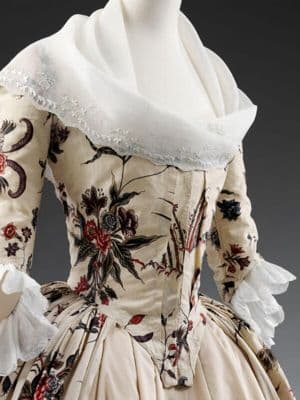
Influences·rococo decorative arts
SHARED10 years · cross-culture · cross-category
These delicate accessories reveal how rococo's obsession with natural forms played out in two very different textile traditions. The Flemish bobbin lace lappets cascade with dimensional florals worked in thread so fine it practically dissolves into shadow, while the British muslin ruffles take the same botanical impulse and flatten it into precise embroidered sprigs scattered across translucent fabric.
Text
Technique·laceworkMotif·scroll-spiral
SHARED155 years · cross-culture · cross-category
Text73%
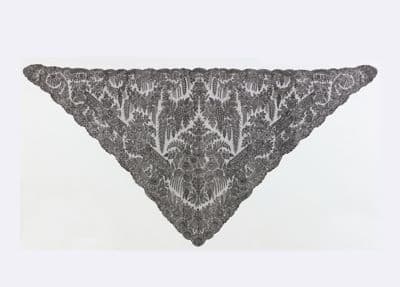
Technique·laceworkMotif·scroll-spiral
SHARED100 years · cross-culture · cross-category
Text72%
Echoes Across Time
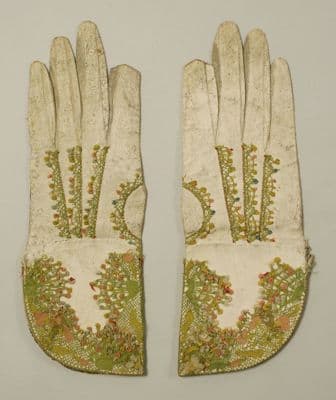
Baroque → Rococo · 50yr66%
SHARED
These pieces reveal how the same decorative DNA migrated across borders and decades, from the intricate botanical motifs worked in gold thread on those English leather gloves to the flowering vines that dance through the Flemish bobbin lace trim. Both deploy the sinuous, naturalistic ornament that defined 18th-century taste—those curling tendrils and scattered blooms that made even the most functional accessories feel like portable gardens.
Influences·rococo decorative arts
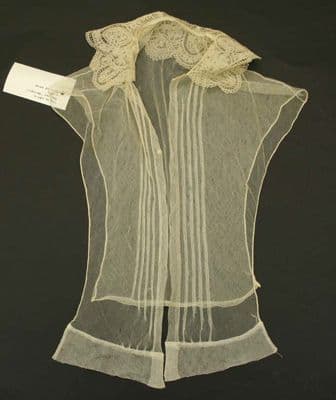
Edwardian → Rococo · 155yr
Pull the Thread→
Follow this garment wherever the graph leads