THE MET
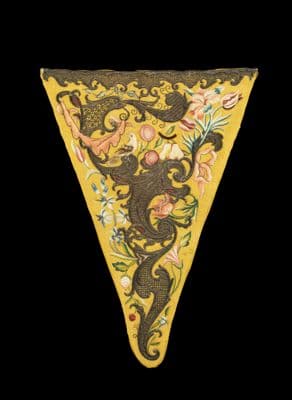
Golden Yellow Silk Stomacher with Floral Embroidery
Rococo · 1750s · British
Production
handmade
Material
silk
Culture
British
Influences
French Rococo textile design
A triangular stomacher panel designed to fill the front opening of an 18th-century gown bodice. The silk foundation features elaborate floral embroidery in naturalistic motifs including roses, leaves, and scrolling vines executed in coral pink and sage green threads against a golden yellow ground. The decorative work appears to be silk thread embroidery with dimensional qualities suggesting raised or padded techniques. The pointed triangular shape tapers from a wide top edge to a narrow bottom point, typical of mid-18th century stomachers. Brown decorative borders frame the edges, and the overall design demonstrates the Rococo period's preference for asymmetrical botanical patterns and delicate color palettes in women's formal dress accessories.
vesttight fit
Connected To
64%
Worn with·chemiseWorn with·staysTechnique·hand-embroideryFunction·court-formal
SHARED50 years · cross-culture · cross-category
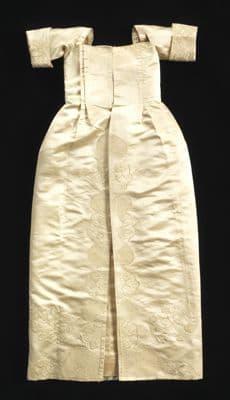
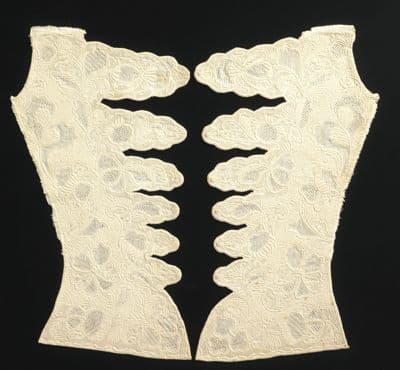
These two bodice pieces reveal how embroidery served the same seductive purpose across a century of changing tastes. The rococo stomacher's golden silk ground blooms with naturalistic flowers in coral and green—pure theater meant to draw eyes to the décolletage—while the earlier baroque bodice fronts whisper their allure through intricate whitework that catches light like frost on linen.
Text74%
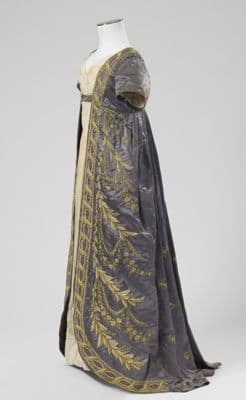
Worn with·chemiseWorn with·staysTechnique·hand-embroideryFunction·court-formal
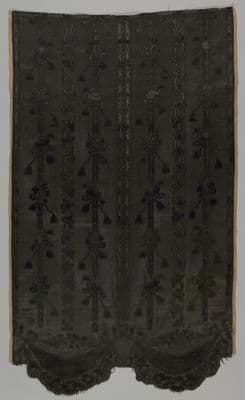
Worn with·chemiseWorn with·staysFunction·court-formal
SHARED20 years · cross-culture · cross-category
These two pieces reveal how Rococo's obsession with nature played out differently across European courts — the Spanish skirt panel uses cut velvet to create shadowy botanical reliefs that catch light like a secret garden, while the British stomacher explodes with hand-embroidered flowers in full Technicolor glory.
59%
Worn with·chemiseWorn with·staysTechnique·hand-embroidery
SHARED50 years · cross-category
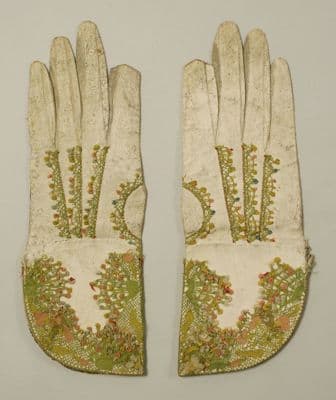
These two pieces reveal how the same aristocratic hand—likely the same embroiderer's workshop—threaded gold through decades of British fashion. The stomacher's serpentine floral vines mirror exactly the paisley-like motifs crawling up the mitt cuffs, both executed in that distinctive raised goldwork that catches light like jewelry.
Echoes Across Time
Rococo → Baroque · 50yr64%
SHARED
These two bodice pieces reveal how embroidery served the same seductive purpose across a century of changing tastes. The rococo stomacher's golden silk ground blooms with naturalistic flowers in coral and green—pure theater meant to draw eyes to the décolletage—while the earlier baroque bodice fronts whisper their allure through intricate whitework that catches light like frost on linen.
Worn with·chemiseWorn with·staysTechnique·hand-embroidery
Pull the Thread→
Follow this garment wherever the graph leads