THE MET
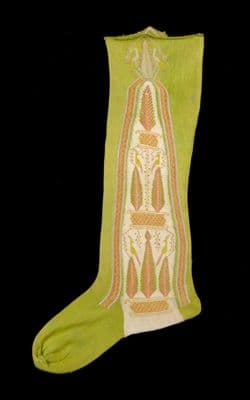
Chartreuse Silk Stockings with Embroidered Decoration
Rococo · 1780s-1790s · British
Production
handmade
Material
silk with embroidery
Culture
British
Influences
18th-century clocking tradition
These silk stockings feature vibrant chartreuse yellow as the base color with elaborate embroidered decoration running vertically along the front seam. The embroidery displays geometric and stylized floral motifs in coral pink and cream white threads, creating a symmetrical pattern that would have been visible when worn with the shorter skirts and pointed shoes of the Rococo period. The stockings are knitted to fit closely to the leg, with reinforced heel and toe areas. The decorative embroidery demonstrates the 18th-century taste for ornate surface decoration and bright colors that characterized fashionable dress accessories of the period.
tights/stockingstight fitknee length
Connected To
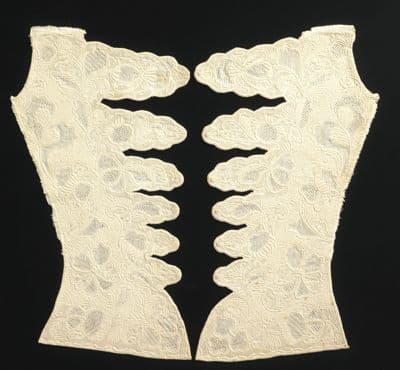
71%
Worn with·chemiseWorn with·gownWorn with·staysTechnique·hand-embroidery
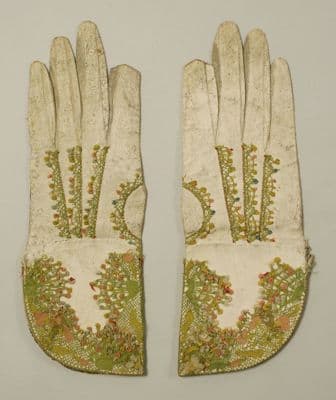
69%
Worn with·chemiseWorn with·gownWorn with·staysTechnique·hand-embroidery
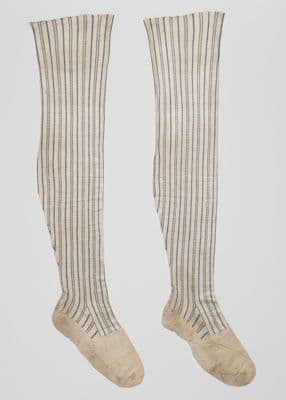
67%
Worn with·chemiseWorn with·gownWorn with·staysTechnique·knitting
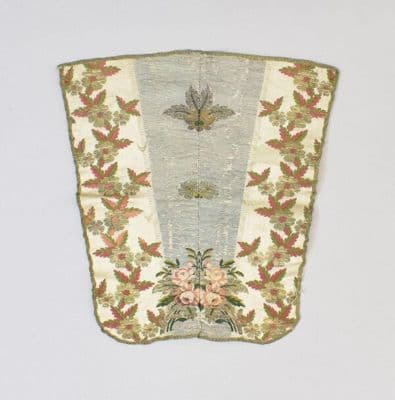
67%
Worn with·chemiseWorn with·gownWorn with·stays
SHARED20 years · cross-culture · cross-category
These two pieces reveal how 18th-century embellishment operated as a kind of visual grammar across the body's geography. The stocking's serpentine embroidery climbs the leg in metallic threads that catch light with every step, while the stomacher's brocaded florals create a fixed garden at the torso's center—both turning functional undergarments into canvases for conspicuous craft.
Pull the Thread→
Follow this garment wherever the graph leads