V&A
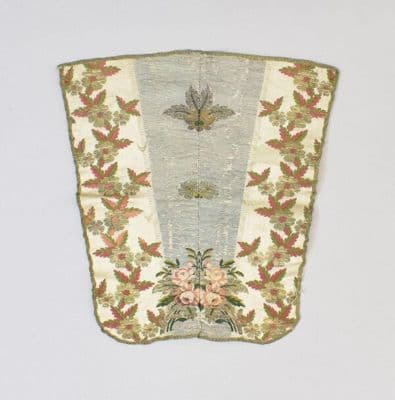
Cream Silk Brocade Stomacher with Floral Motifs
Rococo · 1760s · English
Production
artisan-craft
Material
silk brocade
Culture
English
Influences
French silk design · Spitalfields weaving tradition
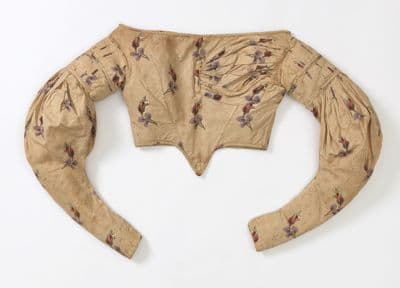
This triangular stomacher features a cream silk ground with elaborate brocaded floral motifs. The design centers on vertical arrangements of naturalistic flowers and foliage in muted greens and pinks, with metallic gold thread highlights. Oak leaf and acorn motifs frame the composition along the curved edges. The piece shows the characteristic Spitalfields silk weaving technique, with raised brocaded elements creating textural depth against the plain weave ground. The stomacher's distinctive shield shape would have filled the open front of a gown's bodice, secured by pins or ties through small loops along the edges.
vest
Connected To
67%
Worn with·chemiseWorn with·gownWorn with·stays
SHARED20 years · cross-culture · cross-category
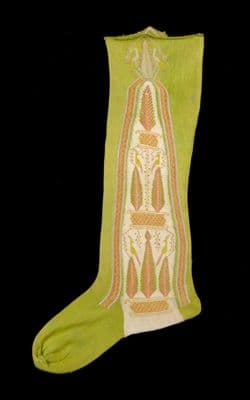
These two pieces reveal how 18th-century embellishment operated as a kind of visual grammar across the body's geography. The stocking's serpentine embroidery climbs the leg in metallic threads that catch light with every step, while the stomacher's brocaded florals create a fixed garden at the torso's center—both turning functional undergarments into canvases for conspicuous craft.
Text67%
Image72%
Worn with·chemiseWorn with·gownWorn with·stays
SHARED20 years · cross-culture · cross-category
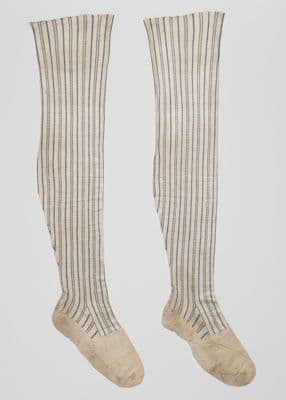
These cream silk pieces reveal how 18th-century English dressing balanced restraint with subtle luxury across every layer of the body. The stockings' delicate vertical ribs create the same kind of refined texture as the stomacher's woven florals—both using silk's natural luster to catch light without shouting about it. Twenty years and several garment categories apart, they share that particularly English genius for making understatement feel like the most sophisticated choice in the room.
56%
Worn with·chemiseWorn with·stays
SHARED10 years · cross-culture
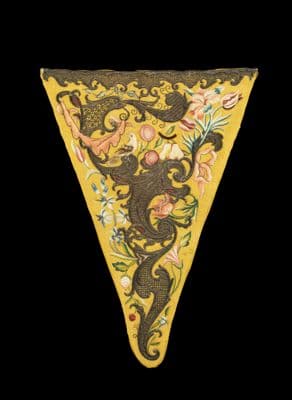
These two stomachers reveal how 18th-century undergarment decoration evolved from maximalist spectacle to refined restraint. The golden yellow piece riots with dense, swirling embroidery that transforms the entire triangular surface into a botanical fantasy, while the cream brocade version pulls back to let scattered floral motifs breathe against pale silk, its wider shape suggesting the later Georgian preference for broader torsos.
Worn with·chemiseWorn with·stays
SHARED70 years · cross-culture · cross-category
These two bodices reveal how floral decoration migrated from aristocratic luxury to middle-class practicality across the Atlantic. The English stomacher's meticulously woven silk brocade — with its dimensional roses and formal botanical symmetry — represents the height of 18th-century court dress, where every thread was a statement of wealth.
Pull the Thread→
Follow this garment wherever the graph leads