THE MET
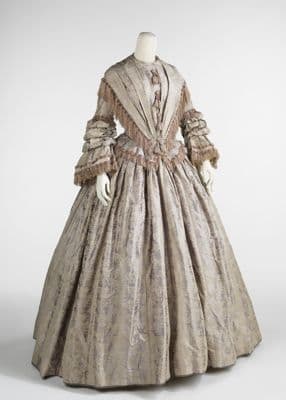
Pale Gray Silk Brocade Fit and Flare Afternoon Dress
Victorian Early / Crinoline · 1850s-1860s · British
Production
ready-to-wear
Material
silk brocade
Culture
British
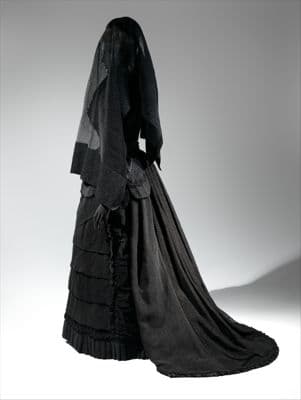
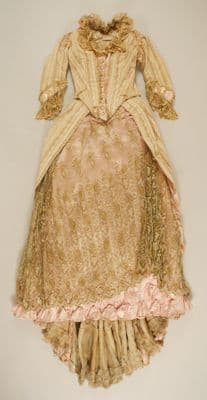
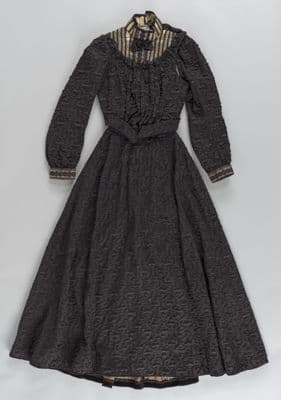
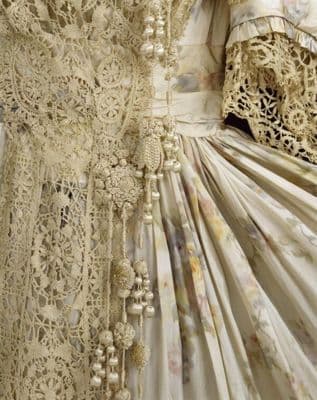
This Victorian afternoon dress features a fitted bodice with a deep V-shaped front closure extending to the natural waistline. The sleeves are full and gathered at the shoulders, tapering to fitted cuffs at the wrists with decorative trim. The skirt extends in a full, bell-shaped silhouette typical of the 1870s bustle period, falling to floor length. The silk brocade fabric displays an intricate woven pattern throughout, creating subtle textural variation across the surface. The bodice construction shows precise tailoring with princess seaming to achieve the characteristic fitted Victorian silhouette. Decorative trim accents the sleeve cuffs and potentially other closure points, demonstrating the period's attention to refined finishing details.
dressfit and flarev-neckfloor length
Connected To
68%
Worn with·bustle padWorn with·chemiseWorn with·corsetWorn with
Echoes Across Time
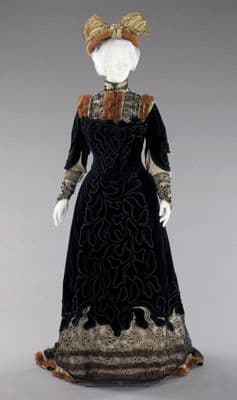
Victorian Early / Crinoline → Fin de Siecle / Gibson Girl · 35yr68%
SHARED
These two dresses trace the evolution of Victorian propriety from architectural grandeur to sensual restraint. The earlier gray brocade builds its drama through sheer volume—that enormous bell-shaped skirt supported by crinolines, with fabric gathered into precise pleats that turn the woman into a walking monument.
Worn with·bustle padWorn with·chemiseWorn with·corset
Pull the Thread→
Follow this garment wherever the graph leads