Victorian Late / Bustle · 1870s · American
Production
handmade
Material
silk crepe
Culture
American
Influences
Victorian mourning etiquette · Second Empire bustle construction
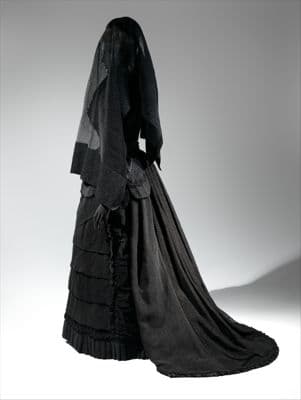
This complete mourning ensemble features a fitted bodice with long sleeves and a dramatic bustle skirt that extends into a substantial train. The black silk crepe fabric creates a matte surface appropriate for mourning dress codes. The bodice appears to have a high neckline and close-fitting sleeves, while the skirt displays the characteristic bustle projection at the back, supported by internal structure. Multiple tiers of ruffles or pleated trim cascade down the skirt, adding textural interest while maintaining the somber black palette. The ensemble includes a full-length mourning veil that drapes over the head and extends beyond the train, creating an enveloping silhouette that completely conceals the wearer in accordance with Victorian mourning protocols.


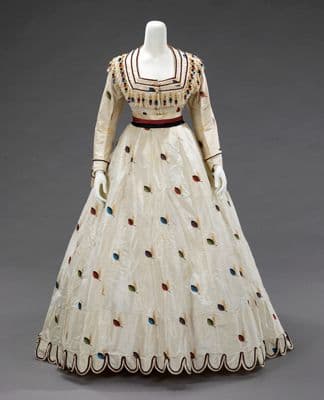
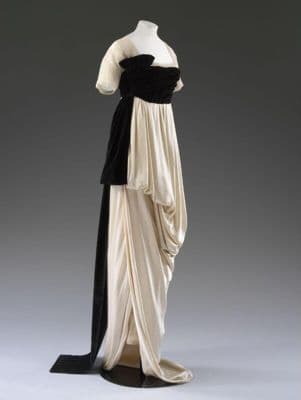
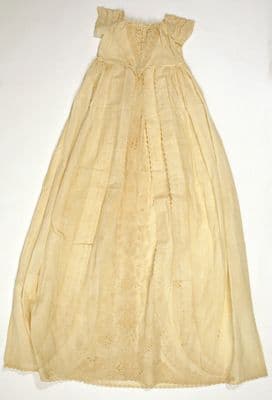
These two gowns reveal how the female silhouette became a battlefield between liberation and constriction across the 19th century. The Empire dress floats over the body with its high waistline just grazing beneath the bust, letting cream silk fall in an unstructured column dotted with tiny colorful motifs—a brief moment when women could almost forget their bodies existed.
Follow this garment wherever the graph leads
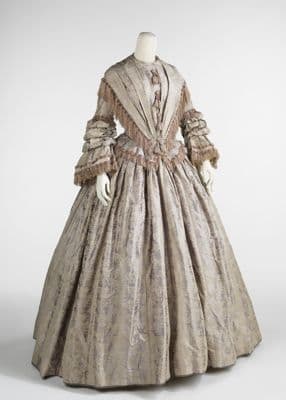
These two dresses capture the Victorian woman's silhouette in transition—the earlier gray brocade still clinging to the bell-shaped crinoline era with its smooth, dome-like skirt, while the black mourning ensemble fifteen years later embraces the bustle's dramatic rear projection and cascading train.
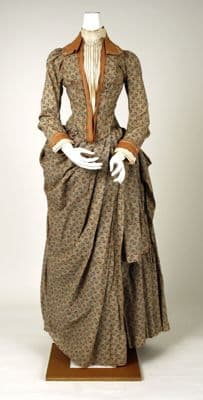
Both dresses reveal how the Victorian bustle silhouette could serve radically different social purposes while maintaining identical structural DNA. The black mourning ensemble transforms grief into theater with its cascading train and dramatic veil, while the olive walking dress makes the same exaggerated rear projection practical for daytime errands, its small-scale print and shorter hemline suggesting movement rather than mourning's static grandeur.
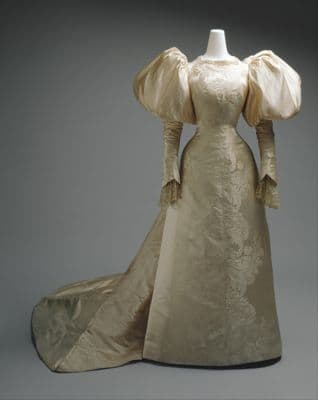
These two gowns reveal the Victorian era's genius for using identical architectural underpinnings to create opposite emotional theaters. The ivory wedding dress and black mourning ensemble both depend on the same corseted torso and bustled silhouette, but where the bride's gown lets its silk satin catch light in smooth, celebratory planes, the widow's crepe devours it with deep pleats and ruffled tiers that seem to cascade downward like grief itself.
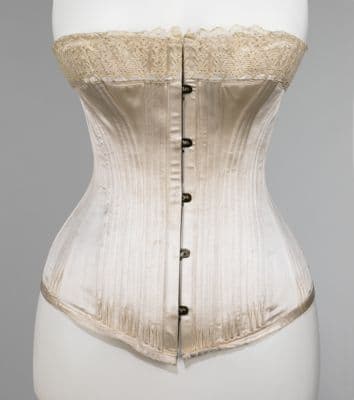
That ivory corset with its brutal 18-inch wasp waist is the hidden architecture beneath the mourning dress's demure black surface — the Victorian woman's body literally reshaped into an hourglass so extreme it required engineering. The mourning ensemble's cascading bustle and fitted bodice only make sense when you understand the foundation garment doing the real work: compressing ribs, displacing organs, and creating that fashionable S-curve silhouette that defined feminine beauty.


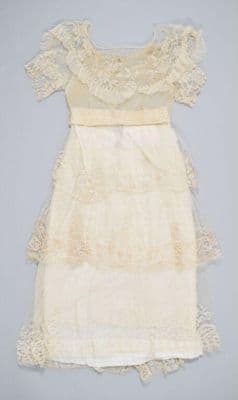
These two dresses speak the same architectural language of feminine propriety, separated by grief and joy. The Victorian mourning dress commands space with its severe bustle and cascade of black silk crepe, while the Belle Époque tea dress whispers in layers of cream silk net that seem to float rather than impose.