Victorian Late / Bustle · 1880s · French
Production
ready-to-wear
Material
cotton with small-scale print
Culture
French
Influences
1880s bustle construction · French tailoring tradition
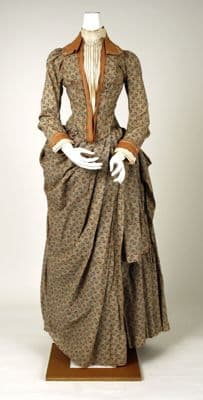
This 1880s French walking dress exemplifies the characteristic bustle silhouette with its fitted bodice and dramatically draped skirt that extends into a pronounced train. The olive green cotton fabric features a small-scale geometric or floral print throughout. The bodice is precisely tailored with a high neckline, long fitted sleeves with contrasting cuffs, and a front-opening design. The skirt demonstrates the period's complex drapery techniques, with fabric gathered and arranged to create the fashionable bustle projection at the back. The garment's construction shows the era's emphasis on structured tailoring combined with elaborate surface manipulation of fabric to achieve the desired silhouette.


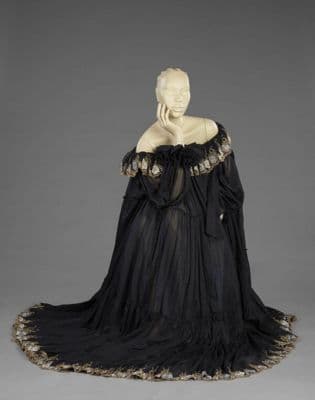
The Victorian walking dress's razor-sharp tailoring and the contemporary mourning gown's dramatic off-shoulder drape represent two opposing philosophies of feminine power dressing, yet both deploy the same weapon: architectural volume at the rear.

Follow this garment wherever the graph leads
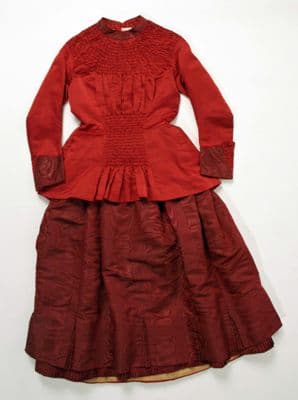
These two 1880s bustle dresses reveal how the same architectural silhouette could serve radically different social scripts. The burgundy silk version, with its rich texture and formal construction, speaks to American drawing room propriety—that tightly fitted bodice and full skirt designed for receiving callers, not taking them.
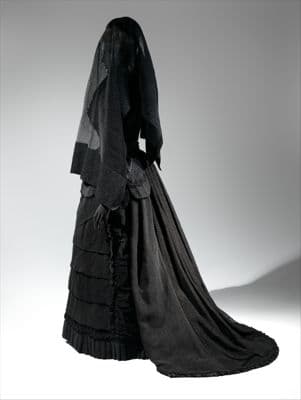
Both dresses reveal how the Victorian bustle silhouette could serve radically different social purposes while maintaining identical structural DNA. The black mourning ensemble transforms grief into theater with its cascading train and dramatic veil, while the olive walking dress makes the same exaggerated rear projection practical for daytime errands, its small-scale print and shorter hemline suggesting movement rather than mourning's static grandeur.
The Victorian walking dress's razor-sharp tailoring and the contemporary mourning gown's dramatic off-shoulder drape represent two opposing philosophies of feminine power dressing, yet both deploy the same weapon: architectural volume at the rear.
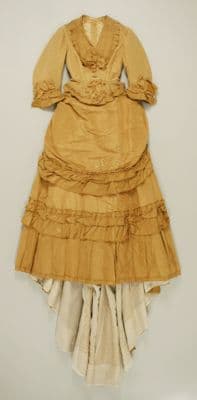
Both dresses reveal the Victorian obsession with architectural manipulation of the female form, but they're playing different games within the same rules. The golden silk taffeta dress luxuriates in its own opulence—those cascading ruffles and gathered bustles are pure theater, designed for drawing rooms where movement was minimal and impact was everything.