THE MET
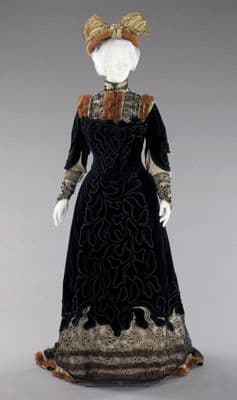
Black Silk Velvet Afternoon Ensemble with Gold Trim
Fin de Siecle / Gibson Girl · 1890s · French
Production
haute couture
Material
silk velvet
Culture
French
Influences
Gibson Girl silhouette · Second Empire court dress
This French afternoon ensemble features a black silk velvet dress with elaborate gold metallic trim and embroidered borders. The fitted bodice has a high neckline with decorative brown leather or fabric panels at the chest and shoulders, creating geometric contrast against the velvet. Long fitted sleeves extend to the wrists. The full skirt flows into a substantial train, bordered with wide bands of gold metallic embroidery or brocade featuring scrolling patterns. The silhouette exemplifies the Gibson Girl era's emphasis on an hourglass figure with corseted waist and sweeping skirts. The rich velvet fabric and metallic trim indicate high-quality construction typical of French couture, while the formal length and luxurious materials mark this as appropriate for prestigious afternoon social occasions.
dressfit and flarehigh neckfloor length
Connected To
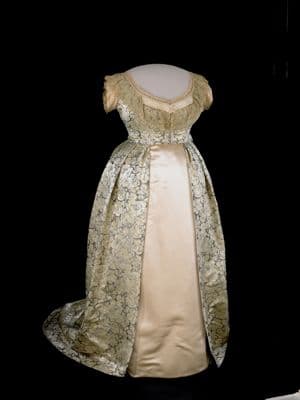
Influences·Second Empire court dressWorn with·bustle padWorn with·
Echoes Across Time
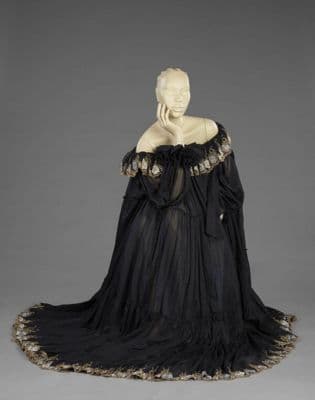
Fin de Siecle / Gibson Girl → 2020s · 130yr70%
SHARED
These two gowns speak the same visual language of luxurious mourning, separated by 130 years but united by their understanding that grief doesn't preclude grandeur. The fin de siècle ensemble uses its rich black velvet as a canvas for elaborate gold metallic embroidery that traces botanical motifs across the hem and bodice, while the contemporary gown employs similar gold threadwork but with a more restrained hand—delicate florals that whisper rather than announce.
Worn with·bustle padWorn with·chemiseWorn with·corset
Pull the Thread→
Follow this garment wherever the graph leads