V&A
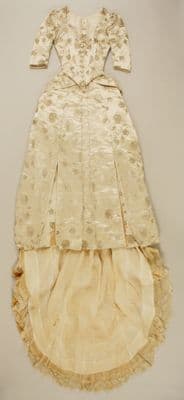
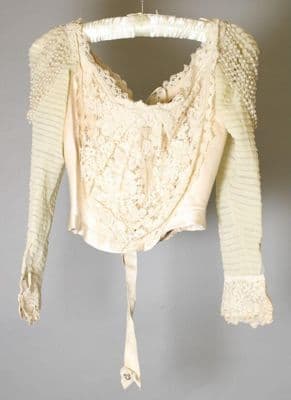
Cream Silk Satin Wedding Bodice
Fin de Siecle / Gibson Girl · 1900s · American
Designer
W. Mulhall
Production
one-of-a-kind
Material
cream silk satin
Culture
American
Influences
Gibson Girl silhouette · Victorian modesty standards
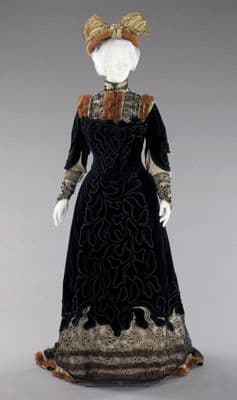
This cream silk satin wedding bodice exemplifies turn-of-the-century American bridal fashion with its precisely fitted silhouette requiring internal boning and corsetry. The bodice features elaborate surface decoration including what appears to be beadwork, lace appliqué, and possibly seed pearl embellishments across the front panel. The high neckline and long fitted sleeves with decorative cuffs reflect the modest coverage expected of Gibson Girl era formal wear. The construction shows sophisticated tailoring with multiple seaming lines to achieve the characteristic S-curve silhouette. The garment fastens at the back and would have been worn over a corset and with a coordinating skirt to complete the wedding ensemble.
dressfit and flaresweetheartfloor length
Connected To
Influences·Gibson Girl silhouetteWorn with·chemiseWorn with·corset
Echoes Across Time
Fin de Siecle / Gibson Girl → 2020s · 120yr62%
SHARED
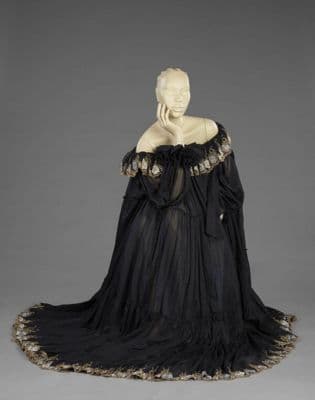
These two garments speak the same language of feminine armor, separated by over a century but united in their understanding of how decoration can transform vulnerability into power. The cream wedding bodice, with its dense pearl beadwork cascading across the bust and intricate lace sleeves, creates a fortress of bridal purity through sheer ornamental excess—every surface defended by hand-stitched embellishment.
Worn with·chemiseWorn with·corsetWorn with·petticoat
Pull the Thread→
Follow this garment wherever the graph leads