THE MET
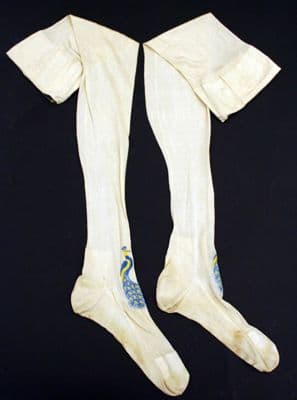
Cream Silk Stockings with Blue Embroidered Motifs
Victorian Late / Bustle · 1870s-1890s · French
Production
ready-to-wear
Material
silk
Culture
French
A pair of cream-colored silk stockings with decorative blue embroidered or woven motifs near the ankle area. The stockings appear to be machine-knitted with a fine gauge, creating a smooth, close-fitting silhouette typical of late Victorian hosiery. The construction shows reinforced toe and heel areas, and the decorative blue pattern appears to be floral or geometric in nature, positioned strategically above the ankle where it would be visible beneath a raised hem. The silk material would have provided both luxury and durability, making these appropriate for formal occasions when quality hosiery was essential to a lady's proper dress.
tights/stockingstight fit
Connected To
Worn with·chemiseWorn with·corsetWorn with·petticoatFunction·court-formal
SHARED20 years · cross-culture · cross-category
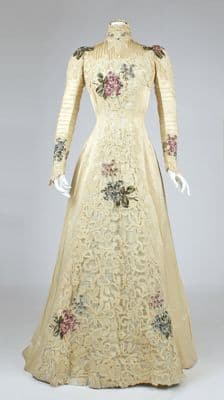
These cream silk pieces reveal how Victorian formality infiltrated every layer of dress, from the intimate to the ceremonial. The stockings, with their delicate blue floral embroidery climbing toward the knee, transformed an unseen undergarment into a work of art that matched the elaborate surface decoration of the later tea gown, where similar botanical motifs bloom across brocaded silk in a symphony of texture and pattern.
Text72%
61%
Worn with·chemiseWorn with·corsetWorn with·petticoatFunction·
Worn with·corsetWorn with·dressWorn with·petticoat
SHARED50 years · cross-culture · cross-category
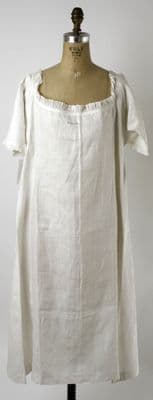
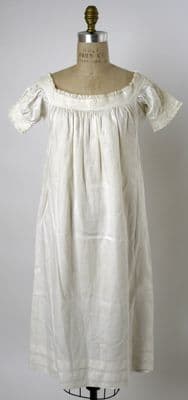
These pieces reveal how Victorian intimacy played out in layers, from skin to street. The silk stockings, with their delicate blue embroidery climbing toward the knee, were meant to be glimpsed—a flash of decorated leg beneath lifted skirts that spoke to private luxury made semi-public. The chemise, meanwhile, represents the era's first layer of modesty, its off-shoulder cut and gathered neckline designed to smooth the transition between bare skin and the corset's rigid architecture.
Worn with·bustleWorn with·corset
SHARED10 years · cross-culture · cross-category
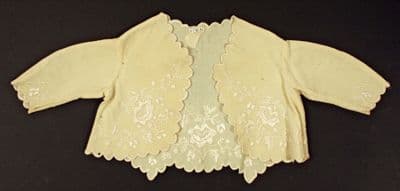
These cream silk pieces reveal the Victorian obsession with luxurious understructure—the bolero's delicate scalloped edges and floral embroidery mirror the stockings' blue silk embroidered motifs, both designed to be glimpsed rather than displayed. The bolero would have topped a corset while the stockings disappeared beneath layers of petticoats, yet both received the same meticulous decorative treatment, proving that Victorian women demanded beauty even in their hidden layers.
Echoes Across Time
Victorian Late / Bustle → Romantic · 50yr60%
SHARED
These pieces reveal how Victorian intimacy played out in layers, from skin to street. The silk stockings, with their delicate blue embroidery climbing toward the knee, were meant to be glimpsed—a flash of decorated leg beneath lifted skirts that spoke to private luxury made semi-public. The chemise, meanwhile, represents the era's first layer of modesty, its off-shoulder cut and gathered neckline designed to smooth the transition between bare skin and the corset's rigid architecture.
Worn with·corsetWorn with·dressWorn with·petticoat
Pull the Thread→
Follow this garment wherever the graph leads