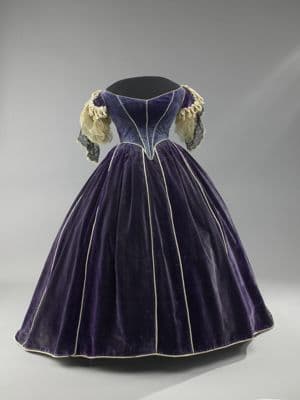
Victorian Late / Bustle · 1860s · American
Production
handmade
Material
silk velvet
Culture
American
Influences
1860s Civil War era formal wear
This formal evening bodice features a deep purple silk velvet construction with a distinctive off-shoulder neckline and short puffed sleeves trimmed in cream-colored fabric with gold accents. The bodice demonstrates the characteristic fitted silhouette of the 1860s with a pointed waist that would have been worn over a corset. The neckline creates a wide horizontal emphasis across the shoulders, while the short sleeves are gathered into decorative bands. The rich purple velvet shows the lustrous surface typical of high-quality silk pile fabric, and the cream trim provides elegant contrast detailing around the sleeve edges and neckline.


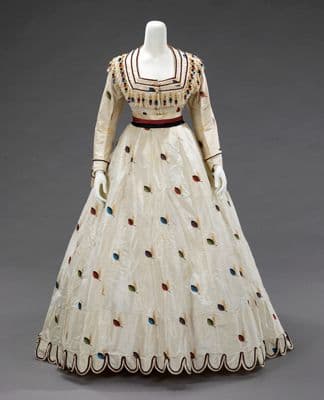
The cream silk gown's scattered jewel-toned motifs and that distinctive scalloped hem with its dark trim speak the same decorative language as Mary Todd Lincoln's purple velvet bodice, where gold braid creates geometric patterns across the neckline and sleeves.

Follow this garment wherever the graph leads
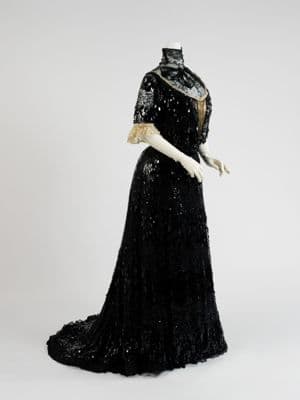
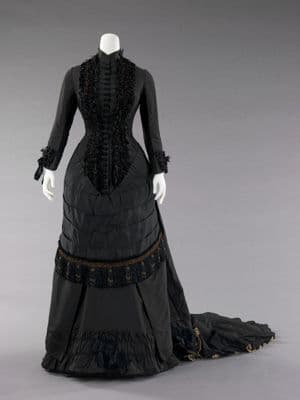
These two gowns reveal how mourning dress evolved from private grief into public theater across two decades of Victorian formality. Lincoln's 1860s purple velvet maintains the restrained dignity of early mourning protocol—that deep amethyst suggesting a widow's careful emergence from full black—while the 1880s Spanish gown transforms grief into Gothic drama with its cascading train and military-inspired frogging that turns the bodice into armor.
The cream silk gown's scattered jewel-toned motifs and that distinctive scalloped hem with its dark trim speak the same decorative language as Mary Todd Lincoln's purple velvet bodice, where gold braid creates geometric patterns across the neckline and sleeves.
The black sequined gown's theatrical sweep and the purple velvet bodice's regal restraint represent two faces of Victorian evening formality—one French and glittering with nouveau riche confidence, the other American and soberly dignified in its rich fabric alone.
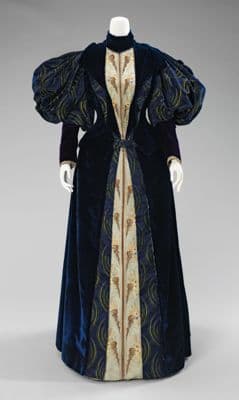
These two velvet gowns trace the evolution of formal feminine power dressing across three decades of the 19th century. Mary Todd Lincoln's purple silk creation, with its severe off-shoulder neckline and unforgiving bodice structure, embodies the rigid formality of 1860s court dress—every seam calculated to project presidential propriety.

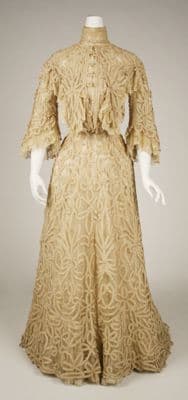
The champagne dress's cascading fringe and the purple velvet's elaborate gold passementerie both speak the same language of American formal wear's obsession with surface animation—one through movement, the other through metallic gleam.