THE MET
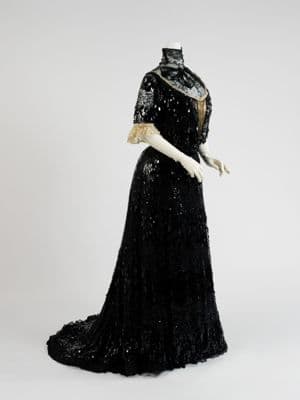
Black Silk Trumpet Evening Gown with Sequins
Victorian Late / Bustle · 1890s · French
Production
haute couture
Material
silk with sequin embellishment
Culture
French
Influences
bustle silhouette · French court dress traditions
This black evening gown exemplifies late Victorian formal wear with its characteristic silhouette featuring a tightly fitted bodice and full skirt extending into a dramatic train. The entire surface is covered in densely applied sequins that create a shimmering texture across the silk foundation. The high neckline with standing collar reflects the modest coverage expected of evening wear despite its luxurious materials. The bodice appears boned and structured to create the fashionable wasp-waisted silhouette, while the skirt's volume and train length indicate the garment's formal status and the wearer's social position within French high society.
dresstrumpethigh neckfloor length
Connected To
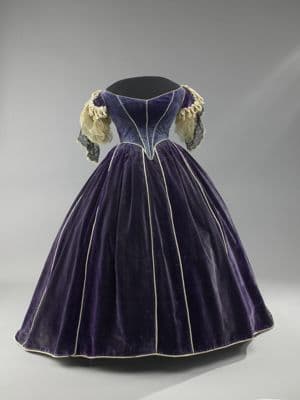
Worn with·chemiseWorn with·corsetWorn with·petticoatFunction·
Echoes Across Time
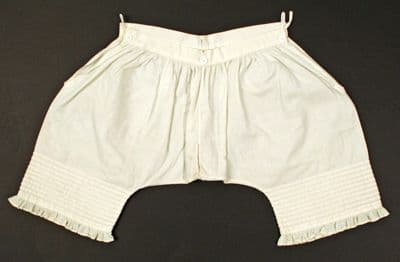
Victorian Late / Bustle → Victorian Early / Crinoline · 35yr56%
SHARED
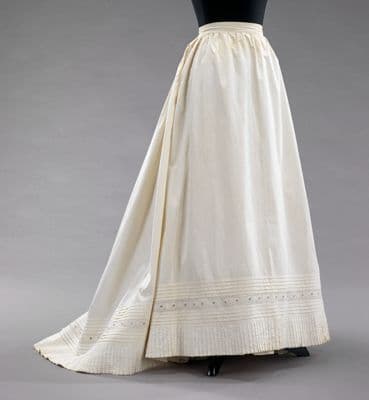
The black sequined gown's sweeping trumpet silhouette and the white cotton pantaloons represent the alpha and omega of Victorian dressing — what the world saw versus what only the wearer knew. Both depend on the same architectural foundation of corsetry and petticoats, but where the gown's glittering surface broadcasts wealth and status, the pantaloons' practical drawstring waist and generous cut prioritize modesty and movement beneath all those layers.
Worn with·chemiseWorn with·corsetWorn with·petticoat
Pull the Thread→
Follow this garment wherever the graph leads