Fin de Siecle / Gibson Girl · 1890s · French
Production
handmade
Material
silk velvet
Culture
French
Movement
Art Nouveau
Influences
Art Nouveau botanical motifs · 1890s leg-of-mutton sleeve
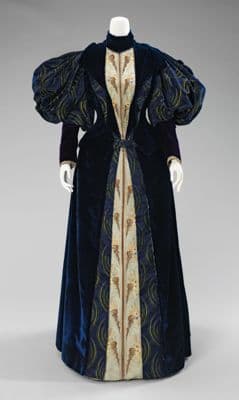
This 1890s French dress exemplifies the dramatic silhouette of the Gibson Girl era with its characteristic leg-of-mutton sleeves that balloon dramatically from shoulder to elbow before tapering to fitted cuffs. The garment features a navy blue silk velvet construction with an elaborate cream and gold decorative front panel displaying stylized Art Nouveau-influenced botanical motifs. The bodice fits closely to the torso, typical of the corseted silhouette of the period, while the skirt falls in controlled folds to the floor. The contrasting front panel creates a striking vertical emphasis, decorated with flowing organic patterns that reflect the emerging Art Nouveau aesthetic beginning to influence fashion design in the 1890s.


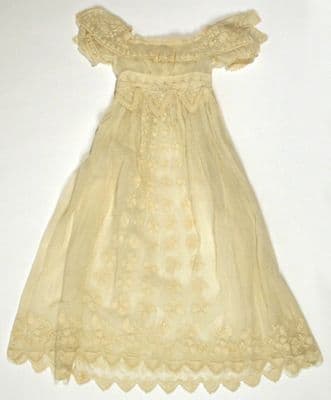
These two dresses speak the same language of feminine retreat, separated by the entire Victorian age. The earlier cream muslin whispers Romantic sensibility with its off-shoulder drape and delicate embroidered sprigs—the kind of dress a woman might wear while reading Byron in her boudoir.

Follow this garment wherever the graph leads
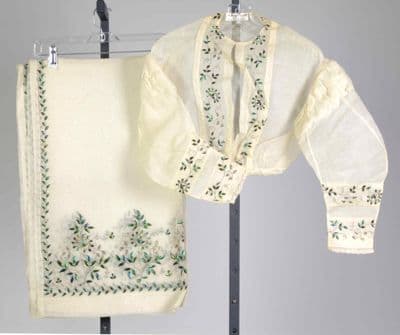
The navy velvet tea gown's sinuous gold embroidery and the cream cotton stole's delicate green florals both speak the language of Arts and Crafts needlework, where hand-stitched botanical motifs became a quiet rebellion against industrial uniformity. Thirty years and an ocean apart, they represent the same impulse: wealthy women commissioning (or creating) pieces that celebrated craft over mass production, whether for an intimate afternoon reception or a formal evening.
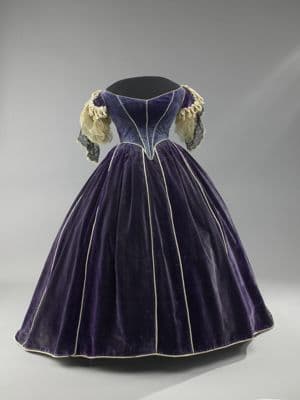
These two velvet gowns trace the evolution of formal feminine power dressing across three decades of the 19th century. Mary Todd Lincoln's purple silk creation, with its severe off-shoulder neckline and unforgiving bodice structure, embodies the rigid formality of 1860s court dress—every seam calculated to project presidential propriety.
These two dresses speak the same language of feminine retreat, separated by the entire Victorian age. The earlier cream muslin whispers Romantic sensibility with its off-shoulder drape and delicate embroidered sprigs—the kind of dress a woman might wear while reading Byron in her boudoir.
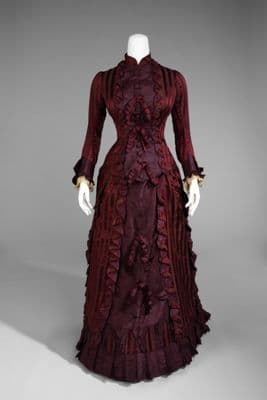
The burgundy bustle gown's cascading ruffles and that navy tea gown's sinuous gold embroidery represent two sides of the late Victorian woman's wardrobe — one built for public performance with its architectural silhouette and button-front propriety, the other designed for private ease with its flowing lines and sensual wrap closure.