THE MET
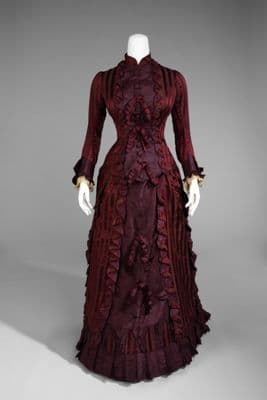
Deep Burgundy Silk Taffeta Bustle Wedding Gown
Victorian Late / Bustle · 1870s-1880s · American
Production
handmade
Material
silk taffeta
Culture
American
Influences
French Second Empire court dress · bustle cage construction
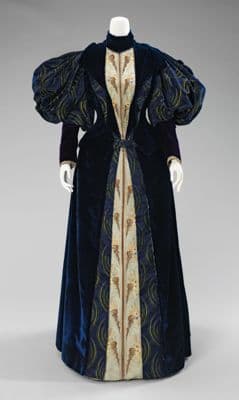
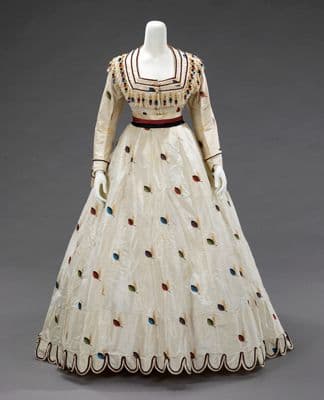
This burgundy silk taffeta wedding gown exemplifies 1870s bustle era construction with its dramatically fitted bodice and elaborate train treatment. The high neckline features intricate self-fabric trim creating geometric patterns across the chest and shoulders. Long fitted sleeves terminate in decorative cuffs with layered fabric details. The skirt extends into a substantial train with multiple tiers of ruffled trim creating cascading horizontal bands. The bustle silhouette projects the fabric dramatically behind the wearer, supported by internal structure. Rich burgundy coloring was an unconventional but fashionable choice for Victorian wedding attire, departing from traditional white while maintaining formality through luxurious silk taffeta and elaborate surface ornamentation.
dressfit and flarehigh neckfloor length
Connected To
Worn with·chemiseWorn with·corsetWorn with·petticoat
Echoes Across Time
Victorian Late / Bustle → Empire / Regency · 70yr60%
SHARED
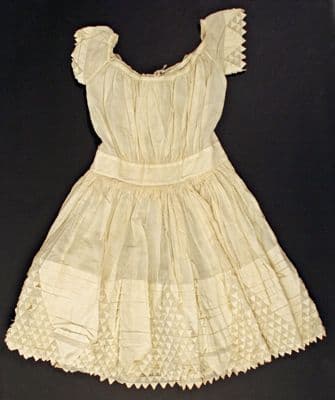
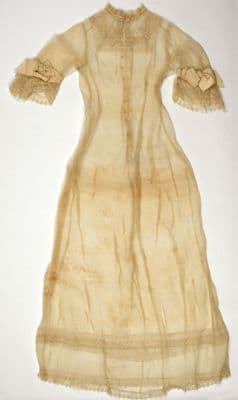
These two gowns reveal how dramatically the female silhouette shape-shifted between the Regency and Victorian eras, yet both demanded the same architectural undergarments to achieve their effects. The cream Empire dress with its geometric trim and scattered polka dots creates a columnar line that skims the body, while the burgundy bustle gown builds an elaborate scaffolding of ruffles and pleats that transforms the wearer into a walking sculpture.
Worn with·chemiseWorn with·corsetWorn with·petticoat
Pull the Thread→
Follow this garment wherever the graph leads