THE MET
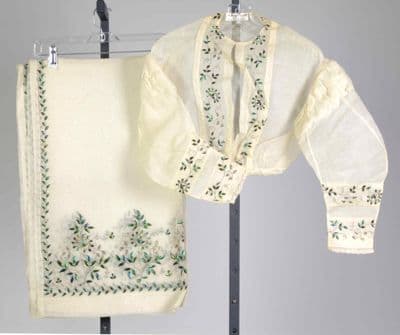
Cream Cotton Evening Stole with Green Floral Embroidery
Victorian Early / Crinoline · 1860s · American
Production
handmade
Material
cotton
Culture
American
This ensemble consists of a rectangular evening stole and matching blouse in cream cotton, both featuring identical hand-embroidered floral motifs in green thread. The stole displays a sophisticated border design with stylized flowers and foliage arranged in repeating patterns along the edges. The accompanying blouse shows a fitted bodice construction typical of the 1860s, with long sleeves gathered at the wrists and embroidered decoration concentrated around the neckline, cuffs, and front opening. The embroidery work demonstrates fine needlework skills, with delicate botanical motifs executed in satin stitch and stem stitch techniques. This coordinated set represents the Victorian preference for matching accessories and the period's emphasis on decorative handwork as a marker of refinement and leisure.
scarf
Connected To
63%
Worn with·chemiseWorn with·corsetWorn with·petticoatTechnique·hand-embroidery
SHARED30 years · cross-culture · cross-category
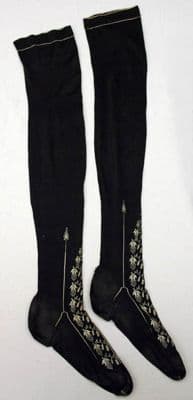
These pieces reveal how Victorian women transformed every surface into a canvas for botanical storytelling, whether on a cream cotton stole destined for evening display or black silk stockings meant for intimate glimpses. The stole's sprawling green embroidery climbs its borders like a garden wall, while the stockings feature delicate white blooms that would peek above boot tops—both using the same folk-art florals to turn functional textiles into personal galleries.
Text73%
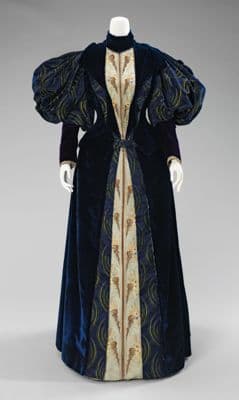
63%
Worn with·chemiseWorn with·corsetWorn with·petticoatTechnique·
62%
Worn with·chemiseWorn with·corsetWorn with·petticoatTechnique·
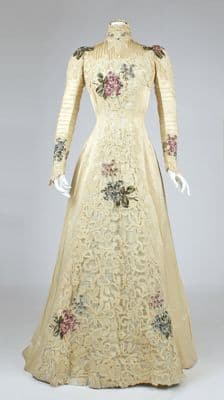
Worn with·chemiseWorn with·corsetWorn with·petticoat
SHARED40 years · cross-category
These pieces reveal how Victorian women's relationship with floral ornament evolved from earnest domesticity to theatrical sophistication. The cotton stole's neat border of green embroidered sprigs—likely worked by hand in a parlor—speaks to the mid-century cult of feminine accomplishment, where a lady's needlework proved her virtue.
Echoes Across Time
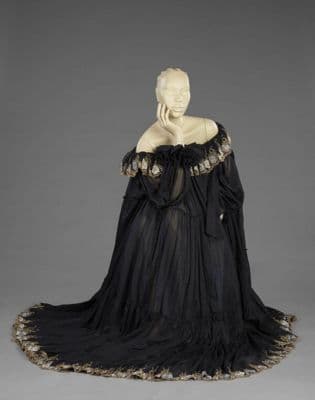
Victorian Early / Crinoline → 2020s · 160yr62%
SHARED
These pieces are separated by 160 years but united by the Victorian obsession with embellishment as emotional armor. The cream cotton set's delicate green florals—scattered across the blouse's yoke and marching in neat borders along the skirt's hem—speak the same decorative language as the mourning gown's gold metallic trim that edges every surface like gilded grief.
Worn with·chemiseWorn with·corsetWorn with·petticoat
Pull the Thread→
Follow this garment wherever the graph leads