SMITHSONIAN
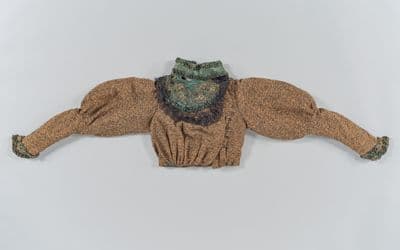
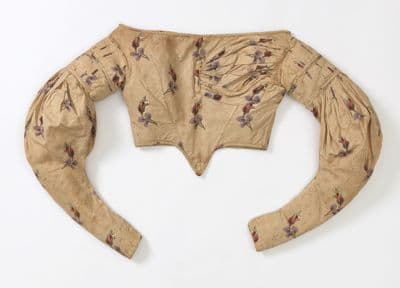
Tan Cotton Fitted Bodice with Floral Print
Romantic · 1830s · American
Production
handmade
Material
printed cotton
Culture
American
Influences
Empire waistline transition · English cotton printing
A fitted cotton bodice with long sleeves and a pointed front waist typical of 1830s construction. The garment features a small-scale floral print in brown and burgundy on a tan ground. The bodice shows characteristic Romantic era shaping with a fitted torso that would have been worn over stays or corsetry. The sleeves appear to be set-in with gathering at the shoulder, reflecting the period's preference for fitted arms. The pointed front waistline and overall silhouette demonstrate the transitional styling between Empire and later Victorian proportions. The lightweight cotton fabric and modest print suggest middle-class American domestic wear rather than formal attire.
top/t-shirt/sweatshirttight fitsquare necklineabove-the-hip
Connected To
Worn with·chemiseWorn with·skirtWorn with·staysTechnique·
Echoes Across Time
Baroque → Romantic · 130yr70%
SHARED
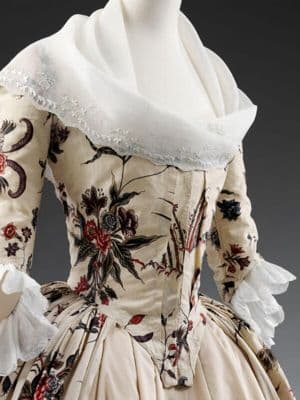
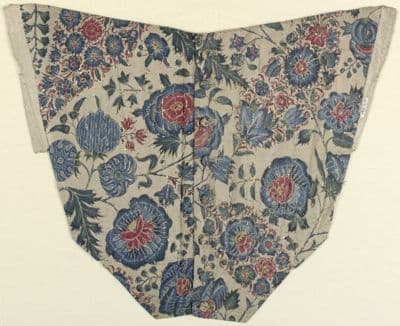
These two bodices reveal how the obsession with Indian florals traveled from Baroque trade routes to American parlors, maintaining its grip across 130 years. The earlier chintz fragment shows the dense, almost narcotic complexity of genuine Indian block-printing—those indigo blooms and coral buds scattered like a fever dream across cream cotton that once made European sumptuary laws tremble.
Worn with·chemiseWorn with·skirtWorn with·stays
Pull the Thread→
Follow this garment wherever the graph leads