Rococo · 1780s · European
Production
handmade
Material
quilted silk
Culture
European
Influences
Rococo botanical decoration · English quilting tradition
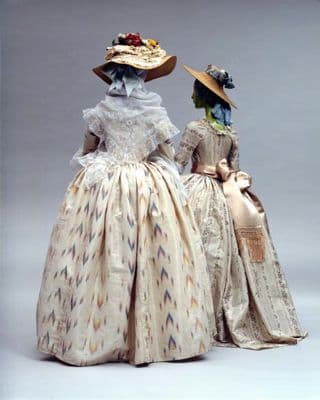
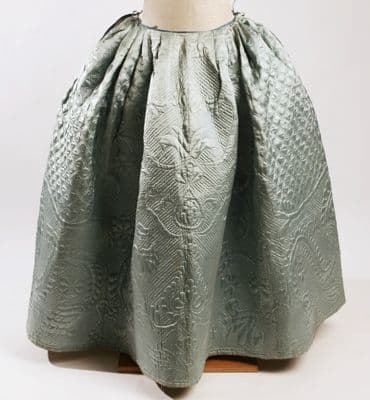
This mid-18th century petticoat displays elaborate quilted silk construction with intricate botanical motifs covering the entire surface. The sage green silk features densely quilted patterns of feathers, flowers, and scrolling vines executed in running stitch quilting that creates raised relief texture. The garment is gathered at the waistband with deep pleats that create substantial volume when worn over side hoops. The quilting technique demonstrates skilled needlework typical of wealthy households, where such undergarments served both practical warmth and status display functions. The botanical motifs reflect Rococo period fascination with naturalistic decoration, while the substantial fabric weight and expert construction indicate this was a luxury garment worn by the affluent classes.
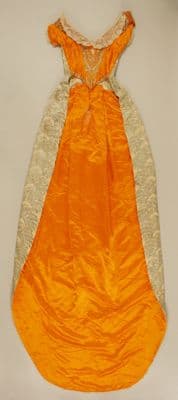
These two pieces reveal how 18th-century luxury lived in the details that rarely survived. The sage petticoat's intricate quilting—those serpentine channels and botanical motifs worked entirely by hand—represents the same obsessive craftsmanship as the mantua's blazing orange brocade shot through with metallic threads that catch light like trapped fire.


These two pieces reveal how 18th-century luxury lived in the details that rarely survived. The sage petticoat's intricate quilting—those serpentine channels and botanical motifs worked entirely by hand—represents the same obsessive craftsmanship as the mantua's blazing orange brocade shot through with metallic threads that catch light like trapped fire.

Follow this garment wherever the graph leads
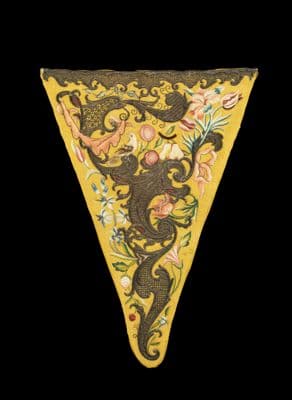
These two pieces reveal how Rococo's obsession with surface ornament could transform even the most utilitarian undergarments into objects of quiet luxury. The petticoat's all-over quilting creates a subtle topography of botanical motifs that would have rustled and caught light beneath a gown, while the stomacher's painted silk explodes with the same decorative impulse—sinuous vines and blooms that mirror the quilted patterns but with the bold confidence of something meant to be seen.
These two 18th-century silks reveal how the same era could speak in completely different textile languages. The sage quilted petticoat whispers through its intricate stitched florals and geometric patterns—a kind of soft armor that would have rustled beneath outer garments, its quilted channels creating subtle sculpture against the body.
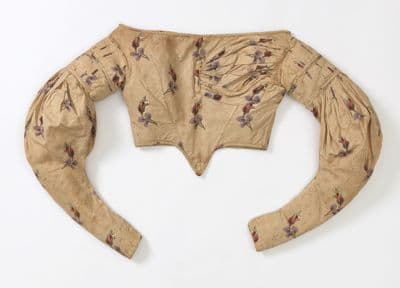
The quilted petticoat's raised botanical motifs—those sculptural leaves and flowers worked in silk thread—find their echo in the bodice's scattered floral sprigs, but where one achieves its garden through laborious needlework, the other gets there with a printing press. Fifty years and an ocean separate rococo European luxury from American practicality, yet both garments speak the same visual language of nature domesticated into pattern.

The quilted petticoat's raised botanical motifs—those sculptural leaves and flowers worked in silk thread—find their echo in the bodice's scattered floral sprigs, but where one achieves its garden through laborious needlework, the other gets there with a printing press. Fifty years and an ocean separate rococo European luxury from American practicality, yet both garments speak the same visual language of nature domesticated into pattern.