THE MET
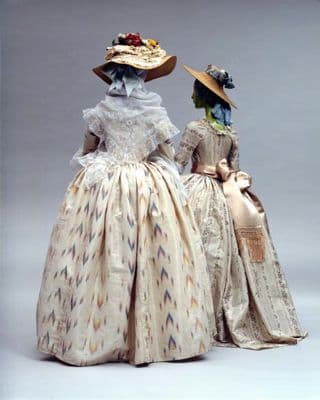
Cream Silk Taffeta Robe with Draped Overskirt
Neoclassical Transition · 1780s · British
Production
handmade
Material
silk taffeta
Culture
British
Influences
Polish national dress inspiration · French court fashion
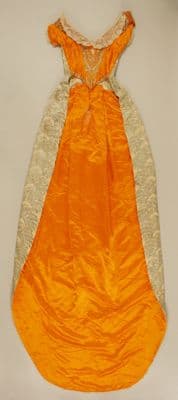
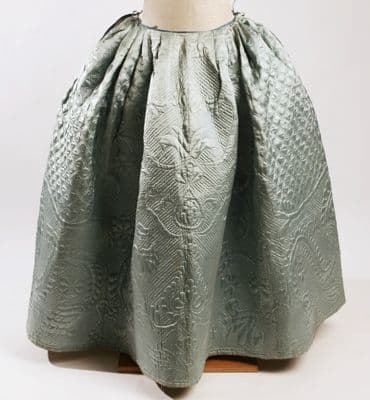
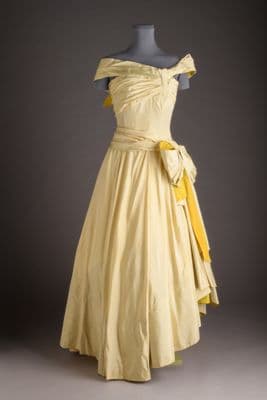
This robe à la polonaise demonstrates the characteristic three-part draped overskirt construction typical of 1780s formal wear. The fitted bodice features a square neckline with elaborate white lace trim cascading down the front. The cream silk ground displays a delicate scattered motif in pale pink and gold. The polonaise's defining feature - the overskirt caught up in three swags by internal drawstrings - creates graceful curves over the underlying petticoat. White lace ruffles edge the elbow-length sleeves and neckline. The accompanying straw hat with ribbon trim and floral decoration completes the ensemble, representing the period's move toward more naturalistic accessories that would characterize the approaching neoclassical aesthetic.
dressfit and flaresquare necklinefloor length
Connected To
Influences·French court fashionWorn with·chemiseWorn with·petticoat
Echoes Across Time
Rococo → Neoclassical Transition · 40yr76%
SHARED
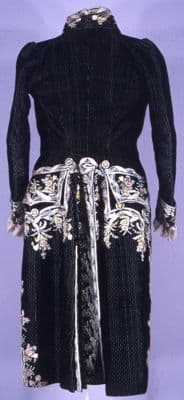
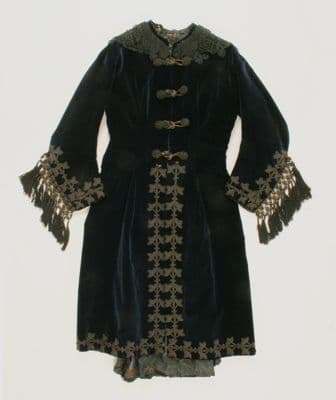
That forest green velvet with its cascading gold braid down the front bodice speaks the same courtly language as those cream silk robes, just with different accents—where the earlier piece shouts its status through metallic embroidery and rich pile, the later gowns whisper it through sheer volume and the kind of silk that catches light like water.
Influences·French court fashionWorn with·chemiseWorn with·petticoat
Pull the Thread→
Follow this garment wherever the graph leads