THE MET
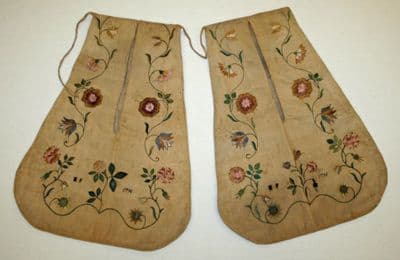
Cream Linen Tie-On Pockets with Floral Embroidery
Rococo · 1780s-1790s · American
Production
handmade
Material
linen
Culture
American
Influences
18th-century botanical embroidery · English crewelwork tradition
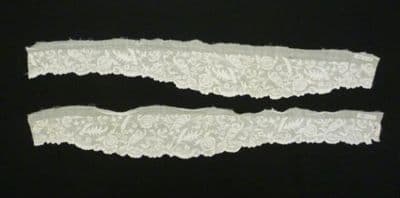
A pair of cream-colored linen tie-on pockets featuring delicate floral embroidery in rose, green, and brown threads. Each pocket displays a curved teardrop shape with rounded bottom and narrow opening at top, secured by linen tape ties. The embroidered design shows naturalistic flowers, leaves, and trailing vines worked in chain stitch and satin stitch, creating an asymmetrical botanical pattern across each pocket's surface. The construction shows hand-sewn seams and reinforced openings typical of 18th-century domestic needlework. These separate pockets would have been worn beneath the gown, accessed through side seam openings, representing the practical storage solution for women before integrated dress pockets became common.
bag/wallet
Connected To
64%
Worn with·gownWorn with·staysTechnique·hand-embroidery
SHAREDsame era · cross-culture · cross-category
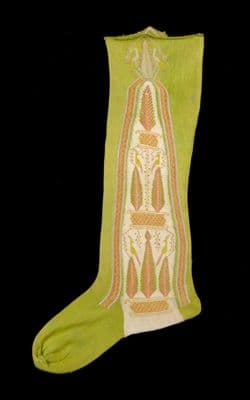
These 18th-century accessories reveal how embroidery transformed the most utilitarian garments into canvases for botanical fantasy. The tie-on pockets' scattered wildflowers—roses, carnations, and delicate trailing vines—mirror the same naturalistic impulse that turned the stockings into a garden party, with their bold central bloom flanked by geometric florals marching up the leg.
Text67%
Image75%
Worn with·gownWorn with·stays
SHARED40 years · cross-category
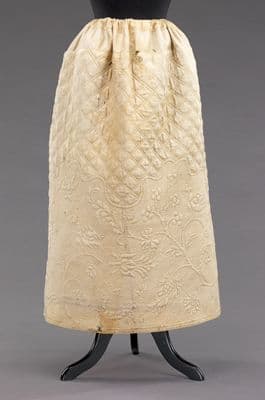
These cream-colored undergarments reveal how 18th-century American women invested their finest needlework in pieces no one would see. The tie-on pockets, with their delicate chain-stitch florals meandering across linen like a secret garden, were meant to be reached through slits in a gown's side seams—pure utility disguised as art.
Worn with·gownWorn with·stays
SHARED40 years · cross-culture · cross-category
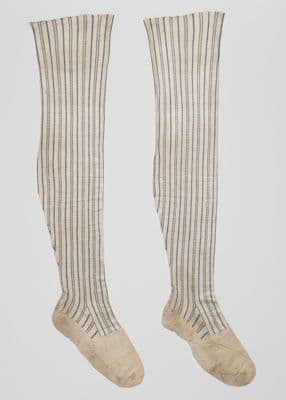
These 18th-century undergarments reveal how even the most hidden layers of dress carried decorative ambition. The embroidered tie-on pockets, with their exuberant floral vines sprawling across cream linen, transform a utilitarian necessity into a canvas for needlework artistry—meant to be glimpsed only when lifting skirts or in the intimacy of undressing.
54%
Worn with·gownTechnique·hand-embroidery
SHAREDsame era · cross-culture
Text73%
Pull the Thread→
Follow this garment wherever the graph leads