THE MET
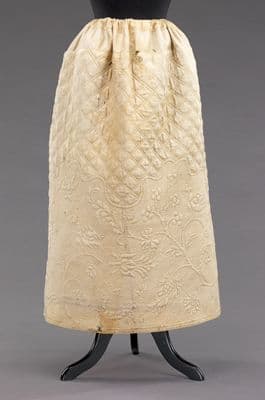
Cream Silk Quilted Wedding Petticoat
Neoclassical Transition · 1780s · American
Production
handmade
Material
silk quilted
Culture
American
Influences
English quilting traditions
This cream silk petticoat features elaborate quilted decoration covering the entire surface in geometric diamond patterns with floral motifs. The quilting creates raised relief designs that would have provided both warmth and visual texture beneath the outer gown. The garment has a gathered waistband and falls to ankle length in the typical full silhouette of the late 18th century. The quilted silk construction demonstrates skilled needlework, with intricate stitching creating complex patterns of diamonds, scrollwork, and stylized flowers. This type of heavily quilted petticoat was essential foundation wear for formal occasions, providing structure and warmth while remaining hidden beneath the dress.
skirta-linefloor length
Connected To
Worn with·chemiseWorn with·gownWorn with·stays
SHARED80 years · cross-culture · cross-category
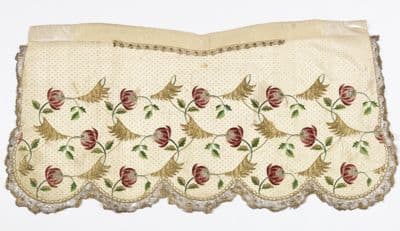
The quilted petticoat's geometric diamonds and the apron's scattered roses represent two competing philosophies of feminine ornament separated by nearly a century of taste. Where the French apron indulges in naturalistic blooms that seem to tumble across silk in rococo abandon, the American petticoat disciplines its beauty into precise, mathematical channels—each quilted line a small rebellion against decorative excess.
Worn with·chemiseWorn with·gownWorn with·stays
SHARED40 years · cross-category
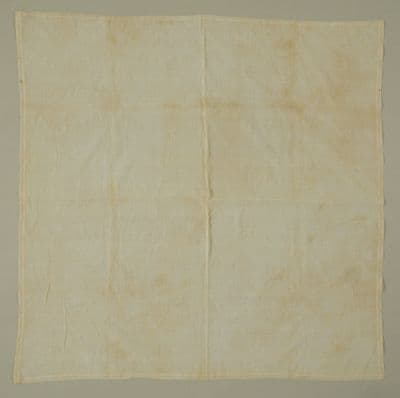
These two cream-colored garments speak to the stubborn persistence of quilting as both necessity and ornament in American women's dress. The triangular fichu's simple cotton muslin bears the ghost of quilted diamonds—practical stitching that kept layers together while creating subtle surface texture for what was essentially underwear made visible.
Worn with·gownWorn with·stays
SHARED40 years · cross-category
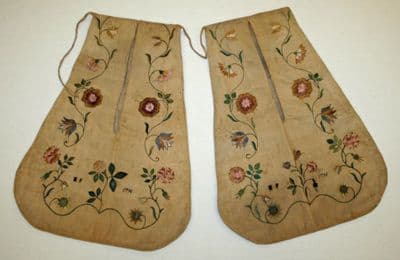
These cream-colored undergarments reveal how 18th-century American women invested their finest needlework in pieces no one would see. The tie-on pockets, with their delicate chain-stitch florals meandering across linen like a secret garden, were meant to be reached through slits in a gown's side seams—pure utility disguised as art.
Worn with·chemiseWorn with·stays
SHARED40 years · cross-culture · cross-category
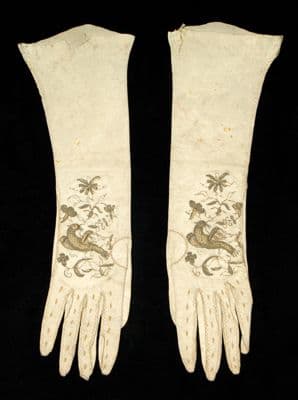
These cream silk pieces speak the same language of 18th-century feminine luxury, but across an ocean and a generation's shift in taste. The British gloves' delicate embroidered florals—those tiny scattered blooms climbing toward the elbow—echo the same decorative impulse as the American petticoat's elaborate quilted motifs, where flowing vines and geometric patterns create texture through stitchwork rather than surface embellishment.
Echoes Across Time
Neoclassical Transition → Baroque · 80yr67%
SHARED
The quilted petticoat's geometric diamonds and the apron's scattered roses represent two competing philosophies of feminine ornament separated by nearly a century of taste. Where the French apron indulges in naturalistic blooms that seem to tumble across silk in rococo abandon, the American petticoat disciplines its beauty into precise, mathematical channels—each quilted line a small rebellion against decorative excess.
Worn with·chemiseWorn with·gownWorn with·stays
Pull the Thread→
Follow this garment wherever the graph leads