V&A
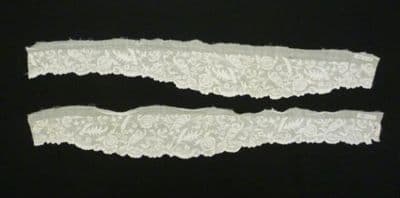
White Cotton Muslin Sleeve Ruffles with Whitework Embroidery
Rococo · 1740s · English
Production
handmade
Material
cotton muslin
Culture
English
Influences
18th-century whitework tradition
Two delicate sleeve ruffles crafted from fine cotton muslin, featuring intricate whitework embroidery throughout their length. The ruffles display elaborate floral and scrolling motifs worked in white thread on white ground, creating subtle textural patterns typical of 18th-century needlework. Each ruffle measures approximately 2-3 inches in width with scalloped edges and gathered construction for attachment to sleeve openings. The whitework technique demonstrates the period's preference for monochromatic decoration that relied on texture and light play rather than color contrast. These accessories would have been sewn to the sleeves of a woman's gown or jacket, extending beyond the cuff to create the fashionable layered sleeve treatment characteristic of Rococo dress.
glove
Connected To
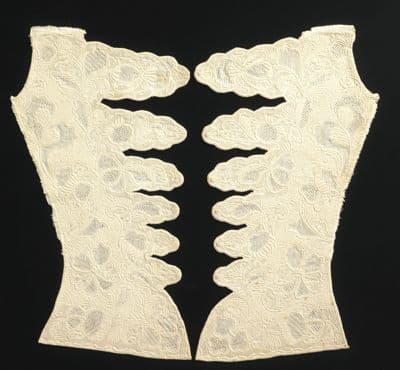
69%
Worn with·chemiseWorn with·gownTechnique·hand-embroideryFunction·court-formalMotif·spiral-scroll
SHARED40 years · cross-culture · cross-category
These two pieces of whitework embroidery reveal how the same decorative impulse traveled across centuries and garment types, from the baroque bodice's dense, all-over scrollwork to the rococo sleeve ruffles' delicate linear flourishes.
Text75%
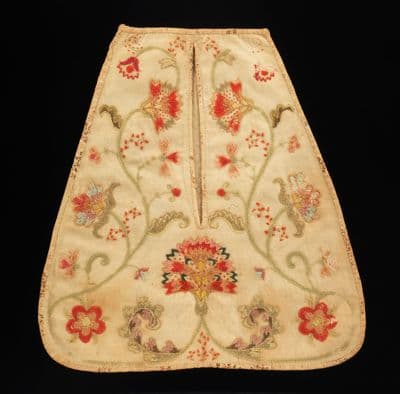
61%
Worn with·chemiseWorn with·gownTechnique·hand-embroidery
SHARED10 years · cross-culture
These delicate accessories reveal how 18th-century women adorned themselves in layers of embroidered luxury, whether American or English. The pocket's silk florals in coral and gold echo the same rococo sensibility as the sleeve ruffles' intricate whitework—both demanding hundreds of hours of needlework that transformed utilitarian undergarments into precious objects.
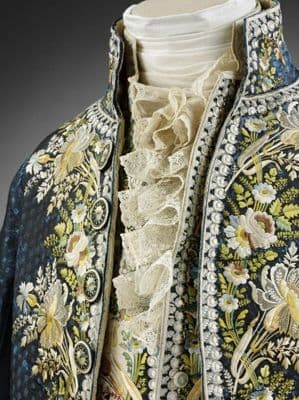
59%
Worn with·chemiseTechnique·hand-embroideryFunction·court-formalMotif·
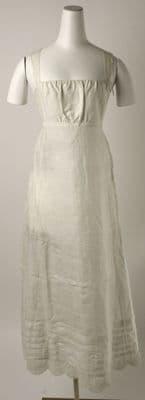
55%
Worn with·chemiseWorn with·gown
SHARED60 years · cross-culture · cross-category
The delicate whitework embroidery on these English sleeve ruffles would have peeked from beneath a Rococo gown's sleeves around 1760, while sixty years later, this American linen petticoat served as the foundation layer for an Empire waist dress, its simple gathered construction echoing the era's classical restraint.
Pull the Thread→
Follow this garment wherever the graph leads