THE MET
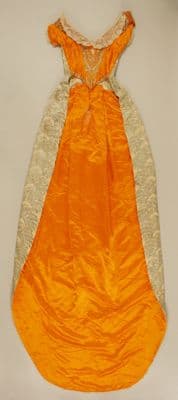
Bright Orange Silk Brocade Court Mantua Gown
Rococo · 1750s-1760s · Austrian
Production
handmade
Material
silk brocade with metallic thread
Culture
Austrian
Influences
French court fashion · mantua construction
This formal court gown displays the characteristic mantua construction of mid-18th century court dress. The bodice features a square neckline with off-shoulder sleeves and appears to be fitted through the torso. The vibrant orange silk brocade forms the primary panels of the gown, while cream-colored silk with metallic brocade creates contrasting side panels and trim. The skirt extends into a dramatic floor-length train typical of court presentation gowns. The construction shows the open-front robe style where the orange fabric forms the back and front center panels, with the lighter brocade filling the sides. Gold metallic threads are woven throughout both fabrics, creating lustrous surface decoration appropriate for Habsburg court ceremonies.
dressfit and flaresquare necklinefloor length
Connected To
Influences·French court fashionWorn with·chemiseWorn with·stays
Echoes Across Time
Rococo → Neoclassical Transition · 40yr72%
SHARED
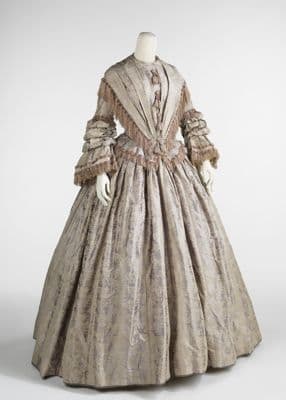
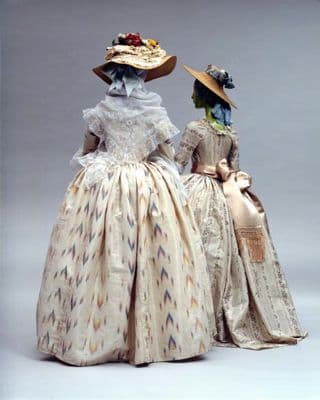
These two gowns capture the seismic shift from Rococo excess to neoclassical restraint that swept European courts in the late 18th century. The earlier orange mantua, with its aggressive metallic brocade and that dramatic trained skirt pooling like molten metal, represents the peak of court theatricality—every inch designed to catch light and command space.
Influences·French court fashionWorn with·chemiseWorn with·stays
Pull the Thread→
Follow this garment wherever the graph leads