SMITHSONIAN
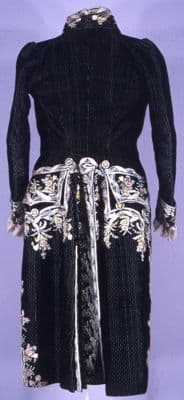
Black Silk Velvet Formal Court Coat
Rococo · 1770s · French
Production
handmade
Material
silk velvet
Culture
French
Influences
French court dress codes · Rococo decorative arts
This formal coat displays the characteristic silhouette of 1770s menswear with a fitted bodice extending into knee-length skirts that flare from the waist. The black silk velvet provides a rich foundation for elaborate silver metallic embroidery concentrated at the front edges, cuffs, and lower hem. The embroidered motifs appear to be floral and foliate designs worked in metallic threads, creating luminous contrast against the dark velvet. The coat features a standing collar and close-fitting sleeves with decorated cuffs. The front closure would have been secured with buttons, though the coat is displayed open to reveal the extensive decorative work. This represents the height of Rococo court fashion where sumptuous materials and ornate surface decoration demonstrated wealth and status.
coatstraighthigh neckfloor length
Connected To
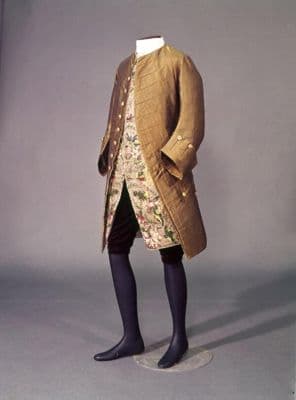
Worn with·breechesWorn with·stockingsFunction·court-formal
SHARED30 years · cross-culture · cross-category
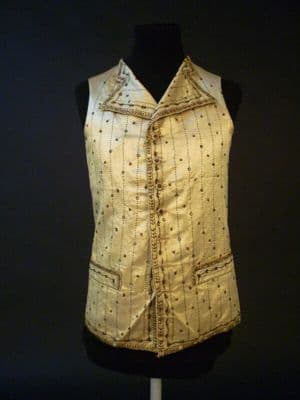
These two pieces reveal how 18th-century court dress operated as a visual arms race across Europe, with each garment wielding embroidery like ammunition. The French coat deploys its floral silver work strategically—cascading down the front edges and cuffs like expensive trim—while the British waistcoat goes nuclear, covering nearly every inch of its surface with dense metallic brocade that would catch candlelight from across a drawing room.
Echoes Across Time
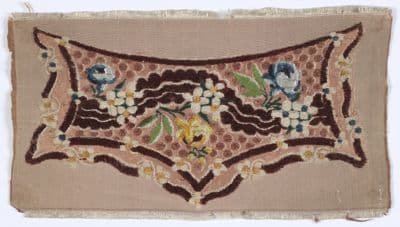
Rococo → Baroque · 70yr64%
SHARED
These two pieces reveal how French court embroidery evolved from Baroque exuberance to Rococo restraint, yet never abandoned its fundamental vocabulary of sinuous florals. The waistcoat pocket's dense needlework—those coiling vines and scattered blossoms worked in silk on silk—anticipates the formal coat's more disciplined silver embroidery that traces the garment's architectural lines with botanical precision.
Worn with·breechesWorn with·waistcoatTechnique·hand-embroidery
Pull the Thread→
Follow this garment wherever the graph leads