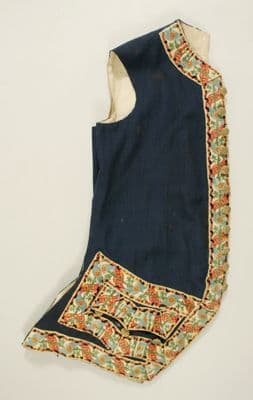
V&A
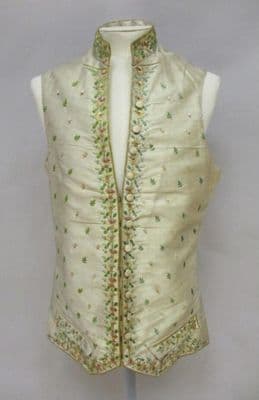
Ivory Silk Embroidered Gentleman's Formal Waistcoat
Victorian Late / Bustle · 1870s · British
Production
handmade
Material
ribbed ivory silk
Culture
British
Influences
French court fashion · rococo decorative arts
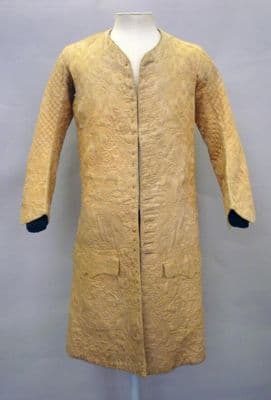
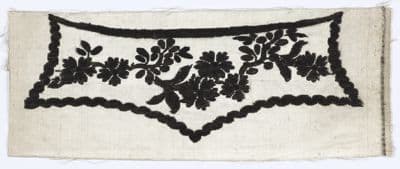
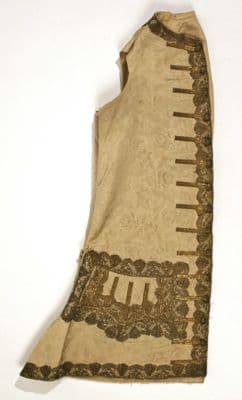
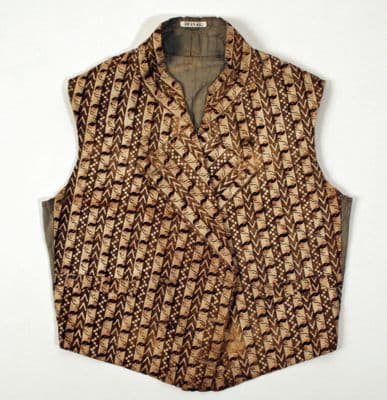
This gentleman's waistcoat displays the refined elegance of 1770s formal menswear with its close-fitted silhouette and standing collar. The ivory ribbed silk foundation is densely embroidered with delicate floral sprigs in pale green silk thread, creating an all-over pattern typical of rococo decorative sensibilities. Gold metallic thread outlines the front edges, collar, and hem with geometric braiding that emphasizes the garment's structured lines. The waistcoat features a center front opening with closely-spaced button holes, and the embroidery work demonstrates the high level of craftsmanship expected in aristocratic male dress of the period.
vesttight fithigh neckhip length
Connected To
76%
Influences·French court fashionInfluences·rococo decorative artsTechnique·hand-embroidery
SHARED170 years · cross-category
Echoes Across Time
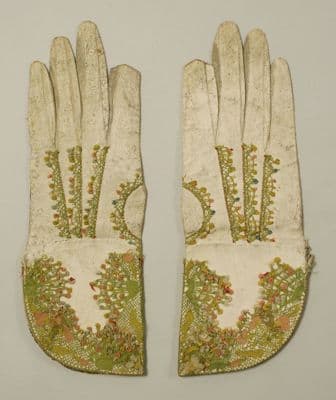
Baroque → Victorian Late / Bustle · 170yr76%
SHARED
These gloves and waistcoat speak the same decorative language across nearly two centuries, both channeling the French court's obsession with botanical embroidery that made luxury synonymous with nature rendered in gold thread. The gloves' sinuous vine work climbing from cuff to fingertip finds its echo in the waistcoat's disciplined floral sprigs marching down the button band, though the Victorian piece has traded Baroque exuberance for the era's more contained formality.
Influences·French court fashionInfluences·rococo decorative artsTechnique·hand-embroidery
Pull the Thread→
Follow this garment wherever the graph leads