THE MET
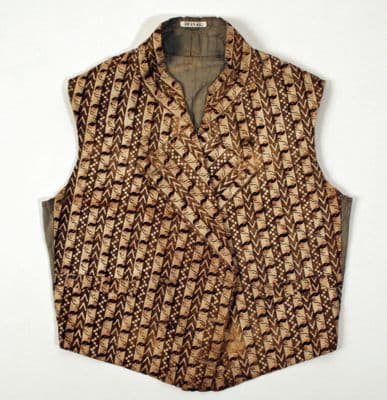
Brown Floral Printed Linen Gentleman's Waistcoat
Rococo · 1780s-1790s · European
Production
handmade
Material
printed linen
Culture
European
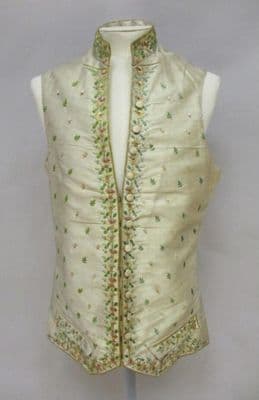
A sleeveless gentleman's waistcoat featuring an all-over printed pattern of small-scale floral or botanical motifs in brown on a cream ground. The garment displays typical mid-18th century construction with a fitted silhouette that would have been worn over a shirt and under a coat. The front opening appears to have multiple buttons, though they are not clearly visible. The fabric shows a dense, repeating pattern characteristic of block-printed or copperplate-printed textiles popular during the Rococo period. The waistcoat's cut follows the body's natural line with side seams shaped to create a tailored fit at the waist.
vestregular fitv-neckhip length
Connected To
Worn with·breechesWorn with·coatWorn with·shirtTechnique·block-printing
SHARED20 years · cross-culture
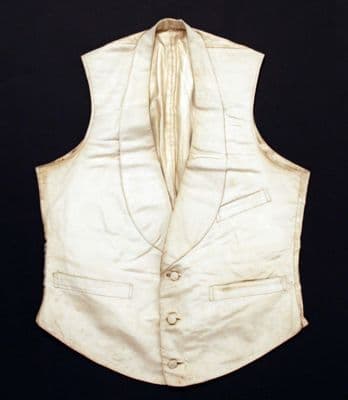
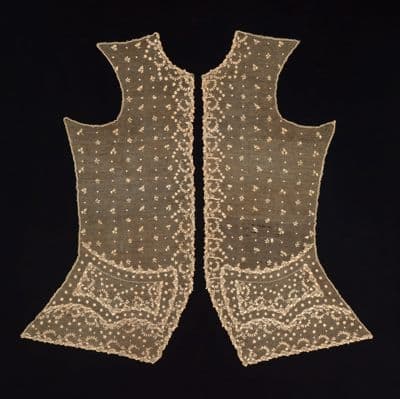
These two waistcoats reveal how the same Rococo impulse toward delicate, all-over pattern could manifest through radically different techniques—one through block-printed florals that cascade across brown linen like scattered petals, the other through meticulous white-work embroidery that transforms cream fabric into a field of tiny stars and geometric blooms.
Text87%
Image
70%
Worn with·breechesWorn with·coatWorn with·shirt
SHARED130 years · cross-culture
These waistcoats reveal how male formality evolved from rococo abundance to Victorian restraint, yet both deploy the same strategy: using the vest as a canvas for decorative virtuosity when the coat and breeches stayed sober. The earlier piece revels in its all-over botanical print like expensive wallpaper come to life, while the Victorian version concentrates its embroidered sprigs and metallic trim into precise vertical bands that follow the body's architecture.
69%
Worn with·breechesWorn with·coatWorn with·shirt
SHARED80 years · cross-culture
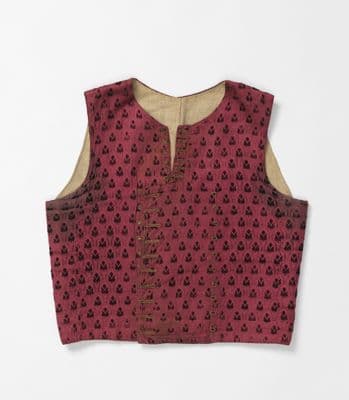
These waistcoats share the 18th-century obsession with surface pattern as a mark of refinement, but they speak different languages of luxury. The earlier rococo vest drowns in an all-over floral print that reads almost like wallpaper—the kind of busy botanical excess that made French taste synonymous with decorative abundance. By contrast, the burgundy Empire-era waistcoat deploys its geometric dots with neoclassical restraint, each motif precisely spaced like a gentleman's argument.
Worn with·breechesWorn with·coatWorn with·shirt
SHARED20 years · cross-culture
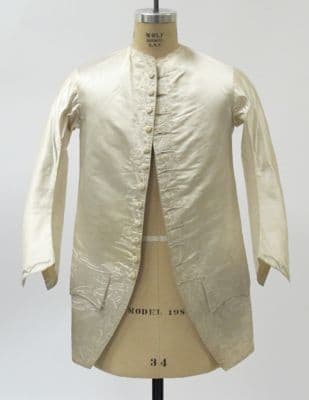
These two waistcoats reveal how 18th-century men's fashion operated as a global language with regional accents. The European piece, with its dense botanical print and practical linen construction, speaks to the period's obsession with exotic florals filtered through Western textile production, while the Chinese example's pristine silk and razor-sharp tailoring shows the same silhouette executed with an entirely different material sensibility.
Echoes Across Time
Rococo → Victorian Late / Bustle · 130yr70%
SHARED
These waistcoats reveal how male formality evolved from rococo abundance to Victorian restraint, yet both deploy the same strategy: using the vest as a canvas for decorative virtuosity when the coat and breeches stayed sober. The earlier piece revels in its all-over botanical print like expensive wallpaper come to life, while the Victorian version concentrates its embroidered sprigs and metallic trim into precise vertical bands that follow the body's architecture.
Worn with·breechesWorn with·coatWorn with·shirt
Pull the Thread→
Follow this garment wherever the graph leads