THE MET
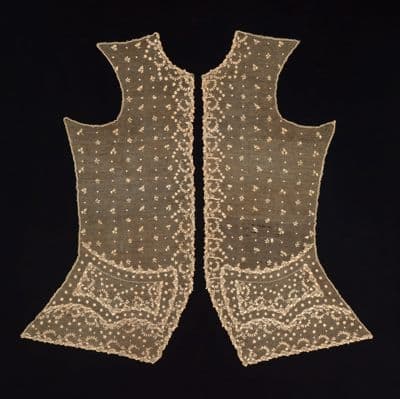
Cream Linen Fitted French Waistcoat
Rococo · 1760s · French
Production
handmade
Material
linen
Culture
French
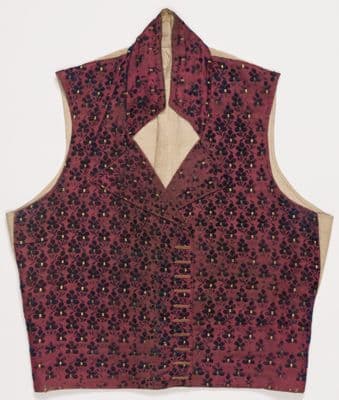
This French waistcoat displays the characteristic construction of mid-18th century men's formal wear. The garment features a fitted silhouette with curved front panels that would sit close to the torso when worn. The linen fabric is decorated with an all-over pattern of small floral or geometric motifs, likely achieved through resist-dyeing or block-printing techniques. The waistcoat shows typical period construction with shaped armholes, a deep front opening that would accommodate the fashionable long coat of the era, and curved hem extensions. The decorative pattern covers the entire visible surface in a regular repeat, demonstrating the Rococo period's preference for ornamental textiles in men's formal dress.
vesttight fitv-neckhip length
Connected To
Worn with·breechesWorn with·coatWorn with·shirtTechnique·block-printing
SHARED20 years · cross-culture
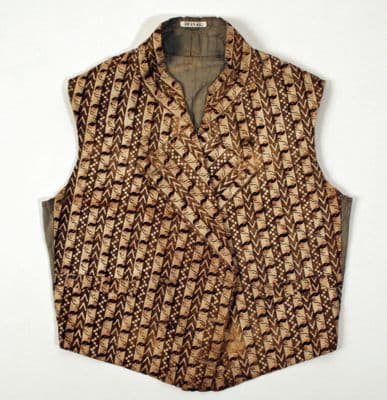
These two waistcoats reveal how the same Rococo impulse toward delicate, all-over pattern could manifest through radically different techniques—one through block-printed florals that cascade across brown linen like scattered petals, the other through meticulous white-work embroidery that transforms cream fabric into a field of tiny stars and geometric blooms.
Text87%
Image
Worn with·breechesWorn with·coatWorn with·shirt
SHARED10 years · cross-culture
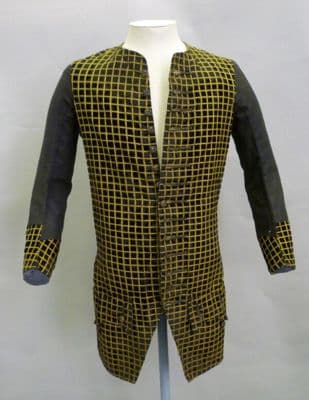
These two waistcoats reveal how the same Rococo silhouette could speak entirely different languages of luxury. The cream linen piece whispers French refinement through its delicate all-over floral embroidery—each tiny bloom hand-stitched in white thread that catches light like scattered pearls across the fitted torso.
Worn with·coatWorn with·shirt
SHARED90 years · cross-culture
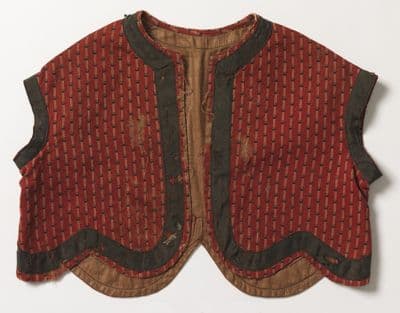
These two waistcoats reveal how men's formal dress evolved from aristocratic ornament to bourgeois restraint across a century of social upheaval. The earlier French piece flaunts its rococo pedigree with delicate floral sprigs scattered like confetti across cream linen—pure court luxury where pattern was power.
Worn with·breechesWorn with·shirt
SHARED40 years
These waistcoats reveal how French tailoring evolved from rococo excess to empire restraint while keeping the same anatomical precision. The earlier cream linen piece sprawls with its elaborate floral embroidery and extended skirts that would peek beneath a coat, every surface a canvas for decoration.
Pull the Thread→
Follow this garment wherever the graph leads