SMITHSONIAN
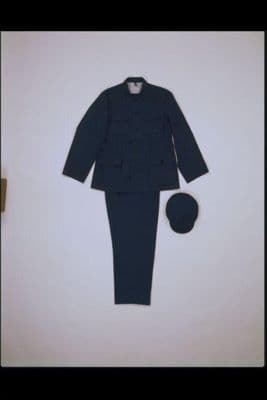
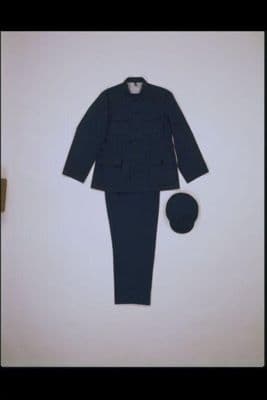
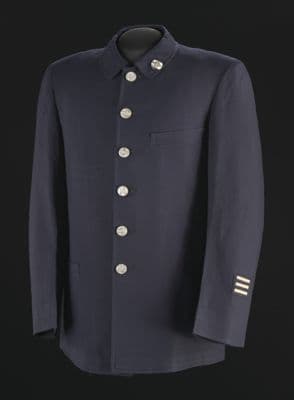
Navy Blue Wool Broadcloth Pullman Porter Jacket
Edwardian · 1900s · American
Designer
Pullman Company
Production
mass-produced
Material
wool broadcloth
Culture
American
Influences
military dress uniform · railroad conductor uniform
A navy blue wool broadcloth uniform jacket featuring a high standing collar with rounded corners and seven white metal buttons arranged in a single-breasted closure. The jacket displays precise military-inspired tailoring with a fitted torso, structured shoulders, and clean lines characteristic of early 20th century service uniforms. Three white chevron stripes on the left sleeve indicate rank or service designation. The garment includes a chest pocket and demonstrates the standardized uniform design implemented by the Pullman Company for their porters, representing both corporate branding and the professionalization of railroad service work during the Edwardian era.
jacketregular fithigh neckhip length
Connected To
Influences·military dress uniform
SHARED50 years · cross-culture · cross-category
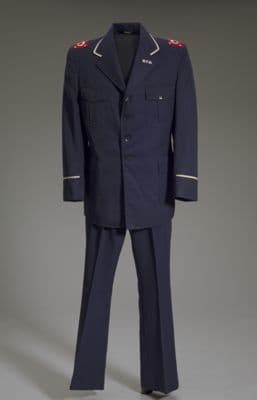
The Pullman porter's double-breasted jacket and this military uniform both speak the same sartorial language of institutional authority, their navy wool canvases decorated with the gleaming punctuation marks of brass buttons and metallic trim. Fifty years separate them, but they're cut from the same cloth of respectability—uniforms that transformed working-class Black men into figures of dignity and competence in white-dominated spaces.
Echoes Across Time
Edwardian → Wartime / Utility Fashion · 50yr63%
SHARED
The Pullman porter's double-breasted jacket and this military uniform both speak the same sartorial language of institutional authority, their navy wool canvases decorated with the gleaming punctuation marks of brass buttons and metallic trim. Fifty years separate them, but they're cut from the same cloth of respectability—uniforms that transformed working-class Black men into figures of dignity and competence in white-dominated spaces.
Influences·military dress uniform
Edwardian → Baroque
Pull the Thread→
Follow this garment wherever the graph leads