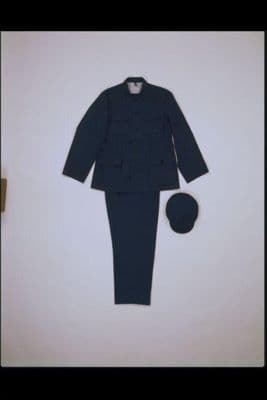
Wartime / Utility Fashion · 1980s · Chinese
Designer
People's Hat Factory
Production
mass-produced
Material
polyester and cotton blend
Culture
Chinese
Influences
Mao suit styling · Soviet worker uniform tradition
A dark navy uniform ensemble consisting of a structured jacket with stand collar, matching straight-leg trousers, and a soft-crowned worker's cap with small peak. The jacket features a boxy, utilitarian silhouette with long sleeves and appears to have a center-front closure. The trousers are cut straight through the leg with a regular rise. The cap shows the characteristic soft crown construction typical of Chinese worker's caps from this period. The polyester-cotton blend fabric appears to have a matte finish suitable for industrial or institutional wear. This represents the standardized uniform aesthetic of 1980s Chinese work clothing, emphasizing practicality and collective identity over individual expression.
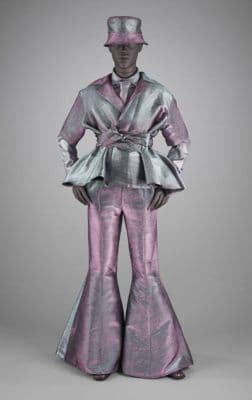
That dark navy worker's uniform and this shimmering purple leather ensemble share the same fundamental geometry: a structured jacket paired with matching trousers, creating a head-to-toe monochrome statement. The Chinese utility suit's austere functionality finds its glamorous descendant in the South African designer's metallic flares and fitted jacket, both treating the matching set as a form of armor—one for labor, one for the spotlight.

That dark navy worker's uniform and this shimmering purple leather ensemble share the same fundamental geometry: a structured jacket paired with matching trousers, creating a head-to-toe monochrome statement. The Chinese utility suit's austere functionality finds its glamorous descendant in the South African designer's metallic flares and fitted jacket, both treating the matching set as a form of armor—one for labor, one for the spotlight.


Follow this garment wherever the graph leads
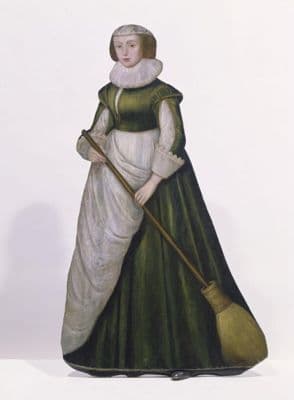
The Mao suit's severe geometry and that utilitarian cap echo something deeper than communist ideology—they tap into the same impulse that put English housekeepers in forest green wool and starched white aprons three centuries earlier. Both outfits weaponize plainness, using restraint and dark, serious colors to signal virtue through visible labor, whether revolutionary or domestic.
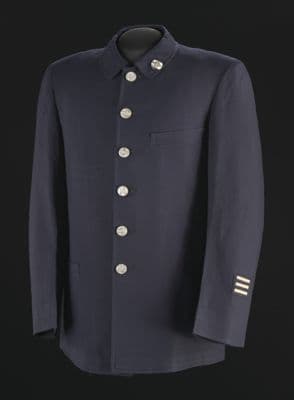
The Pullman porter's brass-buttoned jacket and the Chinese worker's Mao suit both speak the same language of service, just with different accents. That high-necked, military-inspired silhouette—whether it's carrying the dignity of American railroad labor or the revolutionary egalitarianism of Communist China—transforms work clothes into uniform, uniform into identity.
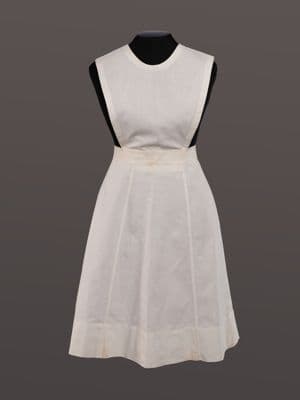
The crisp white apron with its high neckline and practical A-line cut speaks the same utilitarian language as the navy worker's uniform, though separated by decades and continents. Both pieces strip away ornament in service of function—the nurse's apron designed for easy laundering and movement, the Mao-era uniform embodying collective labor through its severe tailoring and matching cap.
The Mao suit's severe geometry and that utilitarian cap echo something deeper than communist ideology—they tap into the same impulse that put English housekeepers in forest green wool and starched white aprons three centuries earlier. Both outfits weaponize plainness, using restraint and dark, serious colors to signal virtue through visible labor, whether revolutionary or domestic.