SMITHSONIAN
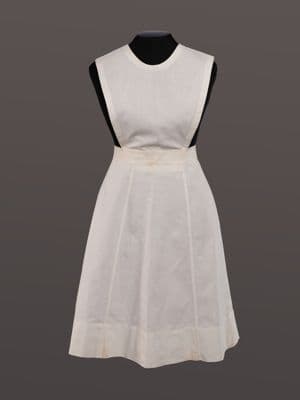
White Cotton A-Line Nurse's Uniform Apron
Wartime / Utility Fashion · 1940s · American
Production
ready-to-wear
Material
cotton
Culture
American
A sleeveless white cotton nurse's apron featuring a fitted bodice with a high rounded neckline and a full A-line skirt that extends to mid-calf length. The garment displays clean, functional construction with minimal ornamentation, reflecting wartime utility design principles. The bodice appears to have darts for shaping, while the skirt provides freedom of movement essential for nursing duties. The apron would have been worn over a uniform dress, secured with ties at the waist and neck. The crisp white cotton fabric represents the medical profession's emphasis on cleanliness and sterility during the 1940s healthcare system.
dressa-lineround neckknee length
Connected To

Worn with·capFunction·workwear
SHARED300 years · cross-culture
The white cotton apron floats over its invisible dress like a ghost of the elaborate ensemble below it—that forest green wool gown where the white apron is fully integrated, its ties creating a deliberate contrast against the rich fabric.
Text61%
Image59%
Entity26%
Worn with·capFunction·workwear
SHARED40 years · cross-culture · cross-category
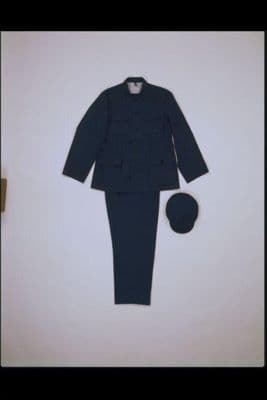
The crisp white apron with its high neckline and practical A-line cut speaks the same utilitarian language as the navy worker's uniform, though separated by decades and continents. Both pieces strip away ornament in service of function—the nurse's apron designed for easy laundering and movement, the Mao-era uniform embodying collective labor through its severe tailoring and matching cap.
Worn with·cap
SHARED90 years · cross-culture · cross-category
Text64%
Image
Worn with·cap
SHARED50 years · cross-culture · cross-category
Text43%
Image64%
Pull the Thread→
Follow this garment wherever the graph leads