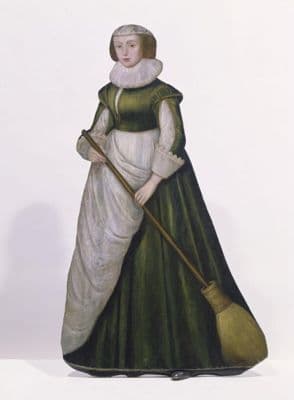
Baroque · 1640s · English
Production
handmade
Material
wool broadcloth
Culture
English
Influences
Puritan dress codes · Dutch domestic painting traditions
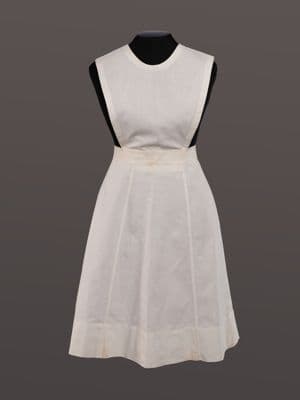
This depicts a 17th-century English working woman's dress featuring a fitted bodice in deep forest green wool with a white linen collar and matching white apron tied at the waist. The dress has a natural waistline with a full skirt that reaches to the floor. The white linen cap covers her hair in typical Puritan fashion. She holds a long-handled broom, indicating domestic service. The construction shows practical tailoring with the bodice closely fitted to the torso and the skirt providing freedom of movement for household tasks. The white apron serves both decorative and protective functions over the wool dress.
The white cotton apron floats over its invisible dress like a ghost of the elaborate ensemble below it—that forest green wool gown where the white apron is fully integrated, its ties creating a deliberate contrast against the rich fabric.
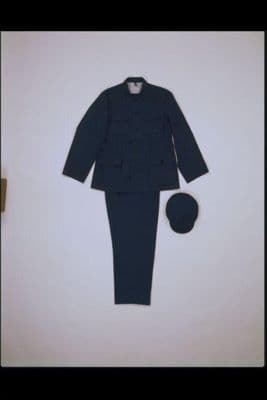

The white cotton apron floats over its invisible dress like a ghost of the elaborate ensemble below it—that forest green wool gown where the white apron is fully integrated, its ties creating a deliberate contrast against the rich fabric.


Follow this garment wherever the graph leads
The Mao suit's severe geometry and that utilitarian cap echo something deeper than communist ideology—they tap into the same impulse that put English housekeepers in forest green wool and starched white aprons three centuries earlier. Both outfits weaponize plainness, using restraint and dark, serious colors to signal virtue through visible labor, whether revolutionary or domestic.
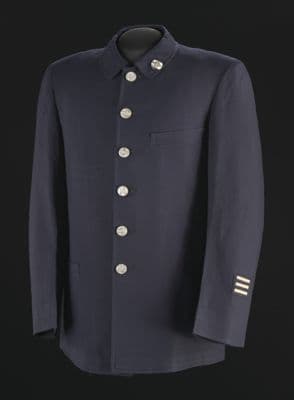
Both garments speak the same language of service—the porter's brass buttons marching up his navy jacket echo the maid's crisp white apron strings, each detail broadcasting competence and respectability to their employers. The porter's peaked cap and the maid's white coif frame faces meant to be trusted but not remembered, while that shared wool broadcloth—sturdy enough for long days, fine enough for front-facing work—bridges 260 years of domestic hierarchy.
The Mao suit's severe geometry and that utilitarian cap echo something deeper than communist ideology—they tap into the same impulse that put English housekeepers in forest green wool and starched white aprons three centuries earlier. Both outfits weaponize plainness, using restraint and dark, serious colors to signal virtue through visible labor, whether revolutionary or domestic.