SMITHSONIAN
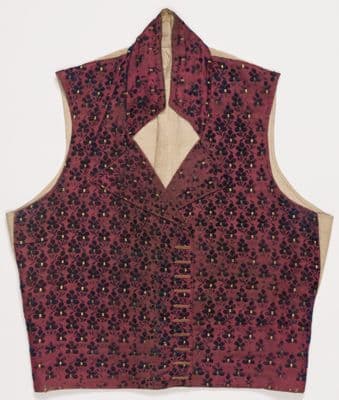
Burgundy Silk Velvet Formal Waistcoat
Empire / Regency · 1800s · French
Production
handmade
Material
silk velvet
Culture
French
This formal waistcoat displays the characteristic high-waisted silhouette of early 19th century menswear. The burgundy silk velvet ground features an intricate all-over pattern of small black geometric motifs, likely floral or star-shaped designs densely scattered across the surface. The garment is constructed with a standing collar and deep V-shaped front opening, typical of Empire period waistcoats. Cream-colored silk binding edges the armholes, front opening, and collar, creating crisp contrast lines. The tailored fit follows the body closely through the torso, designed to be worn under a tailcoat. Multiple small buttons would have fastened the front, though they are not visible in this museum display format.
vesttight fitv-neckhip length
Connected To
Worn with·breechesWorn with·cravatWorn with·shirt
SHARED10 years · cross-culture
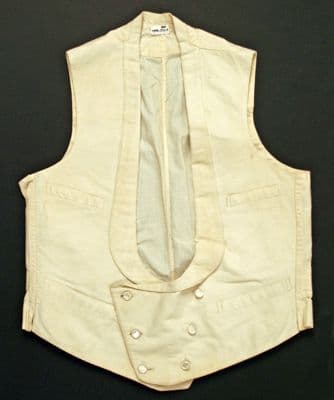
These waistcoats reveal how Regency formality played out across class lines and continents—the cream cotton version with its stark, utilitarian cut speaks to American democratic ideals, while the burgundy silk velvet one, dotted with tiny florals and finished with cream piping, whispers of French aristocratic refinement. Both share that distinctive Empire-era geometry: the dramatically high waist that hit just below the ribcage, transforming the male silhouette into something almost corseted.
Worn with·breechesWorn with·shirt
SHARED180 years · cross-category
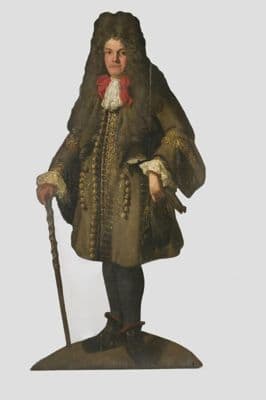
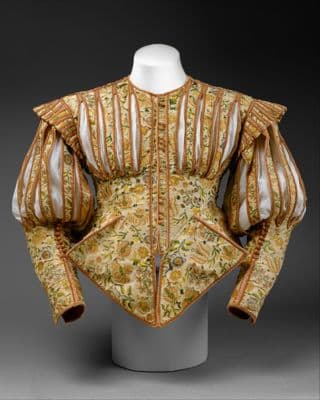
The burgundy waistcoat's diamond-pattern dotting and that golden doublet's intricate brocade both speak the same language of aristocratic display, just separated by nearly two centuries of revolution and social upheaval.
Worn with·breechesWorn with·shirt
SHARED60 years
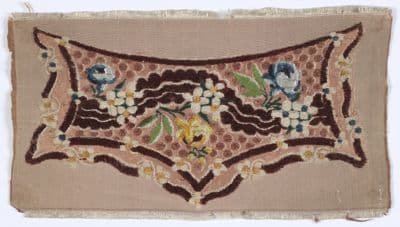
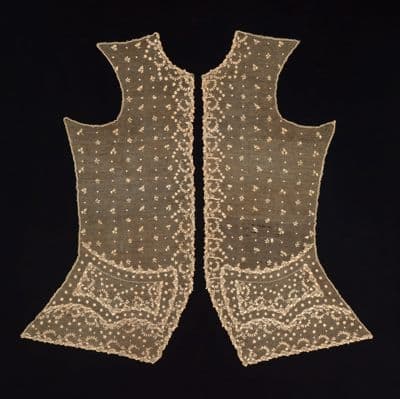
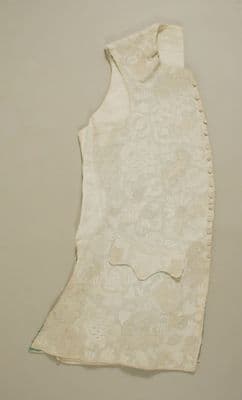
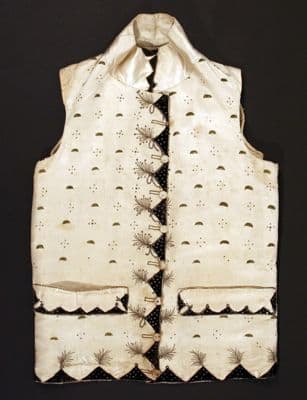
These waistcoats reveal how French formal menswear evolved from Rococo excess to Napoleonic restraint across six decades of revolution. The earlier cream silk piece flaunts its aristocratic pedigree with scattered metallic motifs and elaborate ball buttons marching down the front like military medals, while the burgundy velvet version strips away ornament for a severe geometric neckline that cuts like an arrow into the chest.
Worn with·breechesWorn with·shirt
SHARED60 years · cross-culture
These waistcoats trace the evolution of masculine restraint across the turbulent decades between Rococo excess and post-Revolutionary sobriety. The earlier cream linen piece, with its delicate silk embroidery scattered like confetti across the front panels, speaks to an era when gentlemen could afford to be decorative—notice how the embroidered motifs cluster around the button line, drawing attention to the wearer's leisure to dress slowly.
Echoes Across Time
Empire / Regency → Jacobean · 180yr63%
SHARED
The burgundy waistcoat's diamond-pattern dotting and that golden doublet's intricate brocade both speak the same language of aristocratic display, just separated by nearly two centuries of revolution and social upheaval.
Worn with·breechesWorn with·shirt
Rococo → Empire / Regency
Pull the Thread→
Follow this garment wherever the graph leads