THE MET
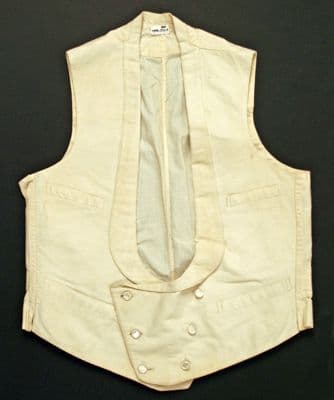
Cream Cotton High-Waisted Formal Waistcoat
Empire / Regency · 1810s · American
Production
handmade
Material
cotton
Culture
American
Influences
neoclassical menswear · English tailoring tradition
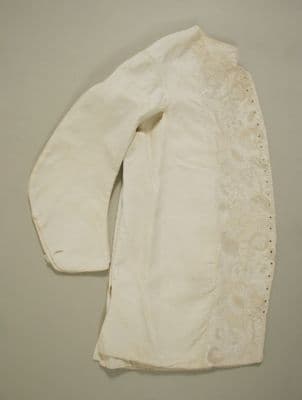
A cream-colored cotton waistcoat displaying the characteristic high-waisted silhouette of the Regency period. The garment features a deep V-shaped neckline that would accommodate the high collar and cravat typical of early 19th-century menswear. The front panels are cut to create a smooth, fitted line over the torso, with the waistline positioned well above the natural waist. Four small buttons are visible at the lower front, likely for adjusting the fit. The back appears to have a belt or strap detail for further tailoring. The cotton fabric shows a subtle texture, possibly a fine weave or slight ribbing. This style represents the neoclassical influence on men's fashion during the Empire period, emphasizing clean lines and a columnar silhouette that complemented the high-waisted trousers of the era.
vesttight fithip length
Connected To
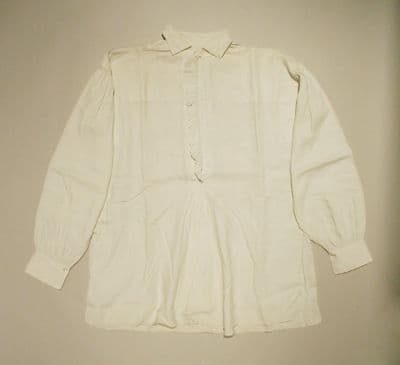
Worn with·breechesWorn with·cravatWorn with·shirt
SHARED10 years · cross-culture
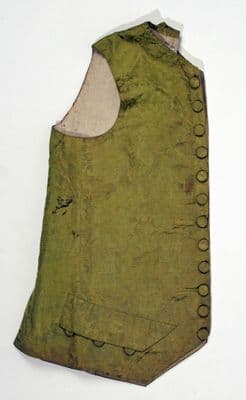
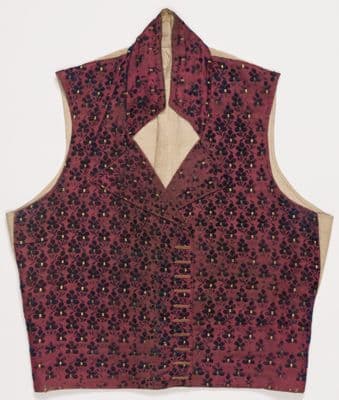
These waistcoats reveal how Regency formality played out across class lines and continents—the cream cotton version with its stark, utilitarian cut speaks to American democratic ideals, while the burgundy silk velvet one, dotted with tiny florals and finished with cream piping, whispers of French aristocratic refinement. Both share that distinctive Empire-era geometry: the dramatically high waist that hit just below the ribcage, transforming the male silhouette into something almost corseted.
Echoes Across Time
Empire / Regency → Rococo · 70yr69%
SHARED
These two waistcoats trace the evolution of masculine restraint across the Atlantic and decades. The earlier British piece, with its deeply curved front edges and fitted torso, speaks to Rococo's sculptural approach to the male silhouette, while the high-waisted American example shows how Empire fashion flattened and simplified that same garment into something almost geometric.
Worn with·breechesWorn with·coatWorn with·shirt
Pull the Thread→
Follow this garment wherever the graph leads