THE MET
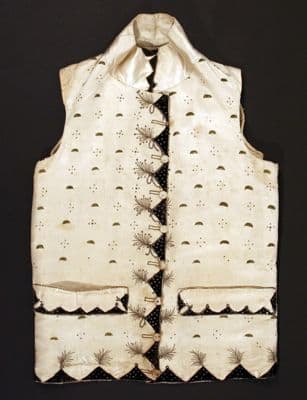
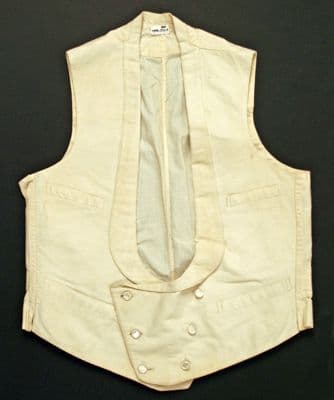
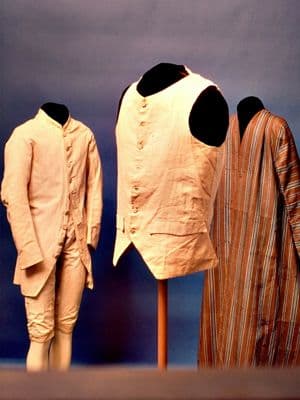
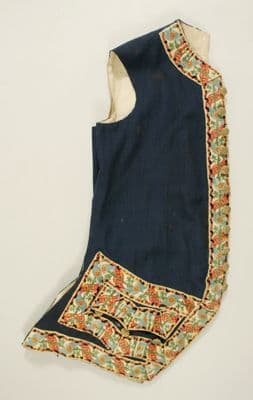
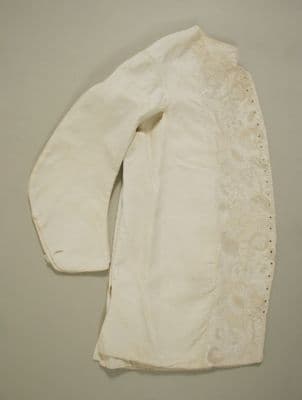
Cream Linen Fitted Gentleman's Waistcoat
Rococo · 1740s · British
Production
handmade
Material
linen
Culture
British
This mid-18th century gentleman's waistcoat displays the characteristic silhouette of the Rococo period with its fitted bodice extending into flared skirt panels that would have reached the hip. Constructed from cream-colored linen, the garment features delicate white embroidered decoration along the front edges and pocket flaps in floral motifs typical of the era. The waistcoat shows evidence of hand-stitched construction with careful attention to the curved front opening that would accommodate the fashionable rounded belly silhouette. Small covered buttons would have fastened the front, and the back likely featured adjustable lacing for fit. The lightweight linen suggests this was intended for warmer weather or less formal occasions within the gentleman's wardrobe hierarchy.
vesttight fitcollarlesship length
Connected To
70%
Worn with·breechesWorn with·coatWorn with·shirt
SHARED40 years
These two waistcoats reveal how 18th-century menswear shifted from rococo extravagance to neoclassical restraint while maintaining the same essential silhouette. The earlier cream linen vest relies on pure texture—quilted channels and tiny decorative buttons marching down the front—for its quiet luxury, while the later pink cotton piece tells its story through scattered floral sprigs that feel almost feminine against the pinstriped ground.
Echoes Across Time
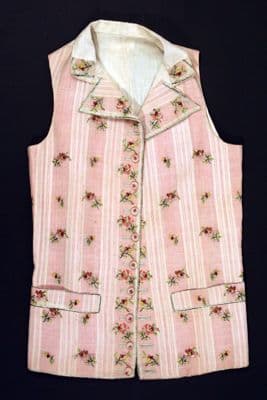
Neoclassical Transition → Rococo · 40yr70%
SHARED
These two waistcoats reveal how 18th-century menswear shifted from rococo extravagance to neoclassical restraint while maintaining the same essential silhouette. The earlier cream linen vest relies on pure texture—quilted channels and tiny decorative buttons marching down the front—for its quiet luxury, while the later pink cotton piece tells its story through scattered floral sprigs that feel almost feminine against the pinstriped ground.
Worn with·breechesWorn with·coatWorn with·shirt
Pull the Thread→
Follow this garment wherever the graph leads