THE MET
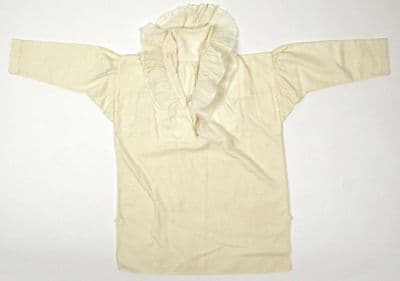
Cream Cotton Work Shirt with Drawstring Neckline
Romantic · 1820s · American
Production
handmade
Material
cotton
Culture
American
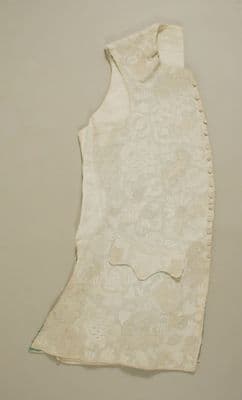
A cream-colored cotton shirt with characteristic early 19th-century construction featuring a deep gathered neckline with drawstring closure and full, loose sleeves that taper toward the wrists. The garment displays the typical boxy, unstructured silhouette of period men's shirts, designed to be worn as an undergarment beneath waistcoats and coats. The neckline construction shows extensive gathering creating a ruffled collar effect, secured by what appears to be a drawstring or tie closure. The sleeves are cut generously wide through the body, providing ease of movement while maintaining the period's preference for concealed body lines. The cotton appears to be a plain weave, typical of practical shirting fabrics of the era.
shirt/blouseloose fitcollarlesship length
Connected To
60%
Worn with·cravatWorn with·waistcoat
SHARED10 years · cross-culture · cross-category
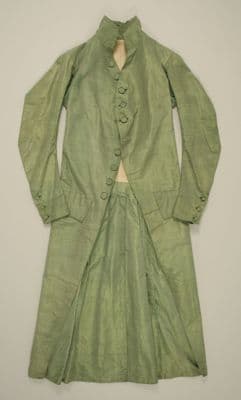
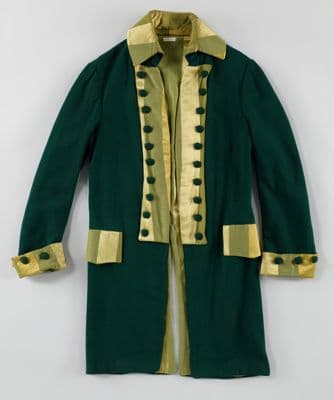
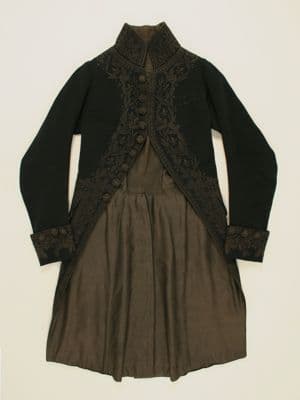
These two garments capture the Romantic era's fascination with the medieval past, but from opposite ends of the social spectrum. The French military tailcoat's elaborate silk embroidery and precisely cut tails echo the courtly splendor that early 19th-century Europe was nostalgic for, while the American work shirt's generous sleeves and drawstring neck resurrect the practical romance of peasant dress.
Pull the Thread→
Follow this garment wherever the graph leads