Rococo · 1750s-1760s · Italian
Production
handmade
Material
silk taffeta
Culture
Italian
Influences
French court fashion · justaucorps tradition
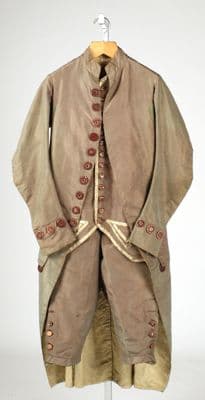
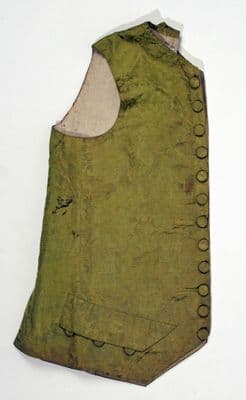
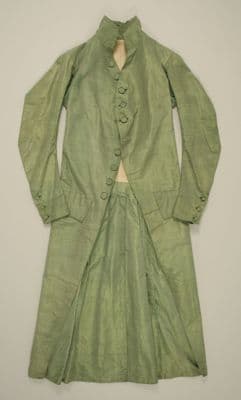
This sage green silk coat displays the characteristic silhouette of mid-18th century formal menswear. The garment features a fitted bodice with a standing collar and front button closure, extending into full skirts that reach mid-calf length. The sleeves are close-fitting through the arm with turned-back cuffs. The coat's construction shows precise tailoring with curved side seams that create the fitted waist and flared hip emphasis typical of rococo period menswear. The silk appears to have a subtle sheen, suggesting taffeta weave. Multiple buttons run down the front opening, and the overall cut demonstrates the period's emphasis on displaying the male figure through structured tailoring and controlled volume in the skirt portion.


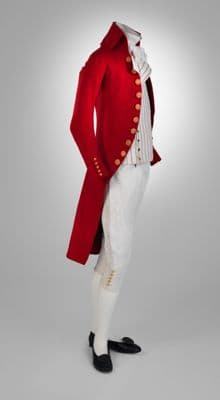
The sage green court coat's fluid drape and understated button closure whispers Rococo refinement, while the crimson military jacket shouts Revolutionary authority with its rigid tailoring and brass button parade down the chest. Both demand the same aristocratic staging—breeches, stockings, the full ceremonial armor of 18th-century power—but the green coat seduces through silk's languid elegance while the red one commands through wool's martial precision.
Follow this garment wherever the graph leads
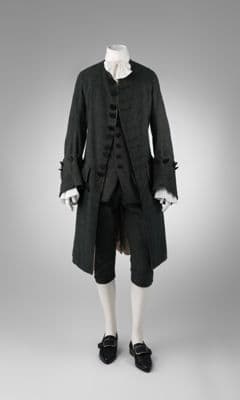
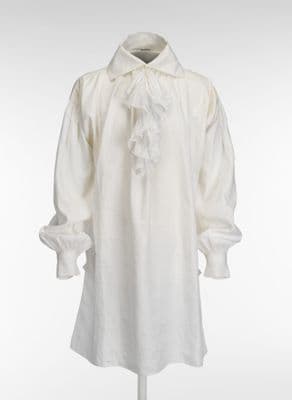
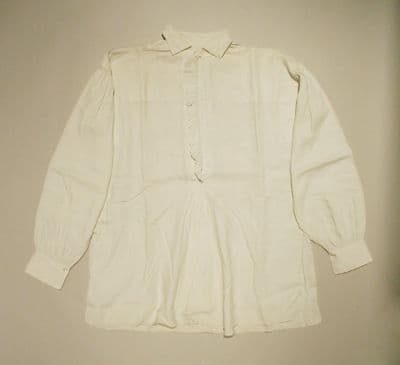
These two pieces reveal how Rococo formality played out across different social moments—the sage green coat's precise button stance and fitted torso speak to the rigid choreography of Italian court presentation, while the cream shirt's billowing sleeves and frothy jabot capture the more intimate theater of French salon culture. Both garments use volume strategically: the coat channels it into a controlled flare at the hips, the shirt lets it bloom romantically at the cuffs and throat.
The sage green court coat's fluid drape and understated button closure whispers Rococo refinement, while the crimson military jacket shouts Revolutionary authority with its rigid tailoring and brass button parade down the chest. Both demand the same aristocratic staging—breeches, stockings, the full ceremonial armor of 18th-century power—but the green coat seduces through silk's languid elegance while the red one commands through wool's martial precision.
These two coats reveal how French court fashion rippled across Europe in waves, each culture translating Versailles' visual language through its own lens. The Italian silk coat catches light like water with its lustrous taffeta and that distinctive curved front opening, while the British wool version translates the same silhouette into something more stolid—same theatrical proportions and button stance, but rendered in matte fabric that whispers rather than shimmers.
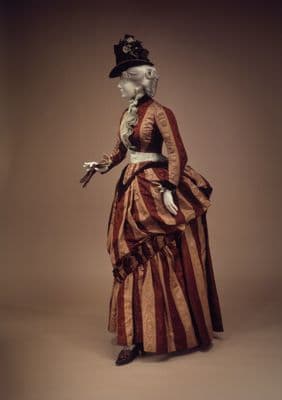
These two garments speak the same aristocratic language across three decades of 18th-century court life, both cut from lustrous silk taffeta that catches light like armor for the elite. The Italian coat's severe sage green and geometric button closure anticipates the Polonaise gown's more theatrical approach—that rust silk draped and bustled into the characteristic pulled-back silhouette that defined fashionable femininity by the 1770s.


These sage green silk coats trace the evolution of 18th-century masculine elegance as it shed its peacock plumage for something more restrained. The earlier Rococo coat flaunts its excess with that dramatic cutaway front and ornate button treatment, while the later three-piece suit tightens the silhouette and streamlines the decoration—same aristocratic DNA, but the younger coat has learned to whisper where its predecessor shouted.