THE MET
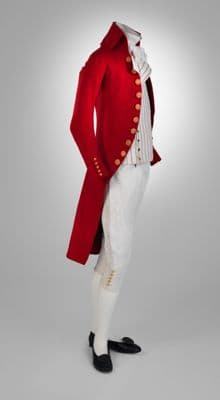
Crimson Wool Military-Style Dress Coat with Gold Trim
Neoclassical Transition · 1780s · French
Production
handmade
Material
wool broadcloth
Culture
French
Influences
military uniform styling · French court dress
A scarlet wool dress coat featuring the characteristic military-inspired silhouette of the 1780s. The garment displays a fitted bodice with standing collar, double-breasted front closure secured by gilt buttons arranged in two parallel rows. The coat extends to knee-length with dramatically flared skirt panels that create the period's distinctive triangular silhouette. White facings line the front edges and collar, creating sharp contrast against the deep red wool. Gold braiding or trim accents the buttonholes and edges. The sleeves are fitted with turned-back cuffs in white. This represents the era's adoption of military aesthetics into civilian formal dress, reflecting both French court fashion and the period's martial influences.
coattight fithigh neckhip length
Connected To
Worn with·breechesWorn with·stockingsWorn with·waistcoatFunction·
Echoes Across Time
Rococo → Neoclassical Transition · 40yr68%
SHARED
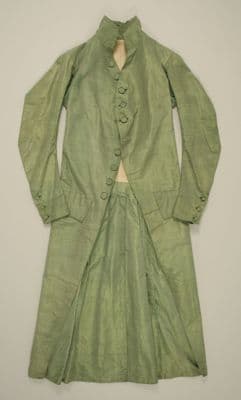
The sage green court coat's fluid drape and understated button closure whispers Rococo refinement, while the crimson military jacket shouts Revolutionary authority with its rigid tailoring and brass button parade down the chest. Both demand the same aristocratic staging—breeches, stockings, the full ceremonial armor of 18th-century power—but the green coat seduces through silk's languid elegance while the red one commands through wool's martial precision.
Worn with·breechesWorn with·stockingsWorn with·waistcoat
Pull the Thread→
Follow this garment wherever the graph leads