THE MET
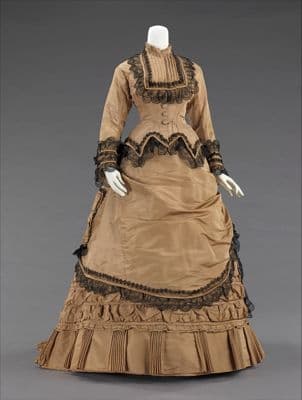
Rust Orange Silk Taffeta Polonaise Gown
Rococo · 1770s · French
Production
handmade
Material
silk taffeta
Culture
French
Influences
English polonaise styling · French court fashion
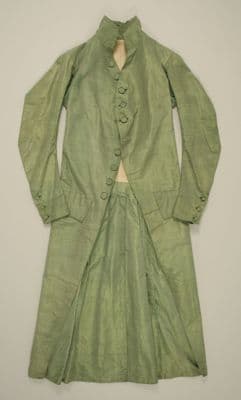
This French polonaise gown demonstrates the characteristic silhouette of the 1770s with its fitted bodice, three-quarter sleeves ending in ruffled cuffs, and distinctive draped overskirt pulled up in swags to reveal the underskirt beneath. The rust-orange silk taffeta creates lustrous folds and gathers, particularly visible in the complex drapery of the polonaise's back treatment. The bodice features a square neckline with decorative trim, while the sleeves show the period's preference for elbow-length cuts with elaborate cuff details. The underskirt extends in a full circle, supported by side hoops, creating the wide silhouette typical of Rococo fashion. The fabric's crisp hand allows for the structured pleating and gathering essential to this garment's architectural form.
dressfit and flaresquare necklinefloor length
Connected To
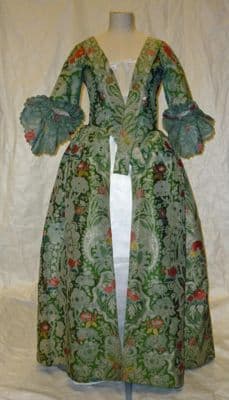
Influences·French court fashionWorn with·chemiseWorn with·staysFunction·court-formal
Echoes Across Time
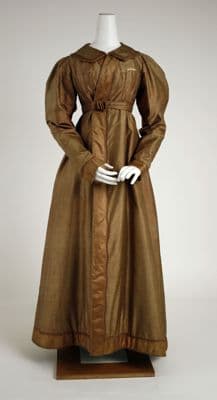
Rococo → Empire / Regency · 40yr59%
SHARED
These two silk taffeta garments reveal how the same lustrous fabric can serve entirely different fashion philosophies across four decades. The earlier polonaise revels in Rococo excess with its draped overskirt, fitted bodice, and elaborate trim that creates a silhouette of calculated artifice, while the later pelisse embraces Empire restraint with its high waist, columnar fall, and minimal decoration that lets the fabric's natural drape speak.
Worn with·chemiseWorn with·staysFunction·court-formal
Pull the Thread→
Follow this garment wherever the graph leads