Rococo · 1760s · British
Production
handmade
Material
wool
Culture
British
Influences
French court fashion · aristocratic menswear
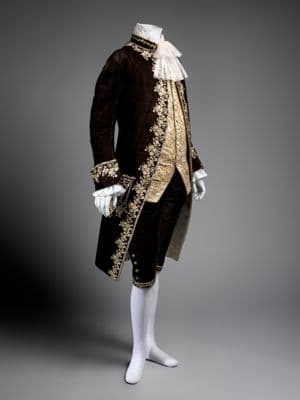
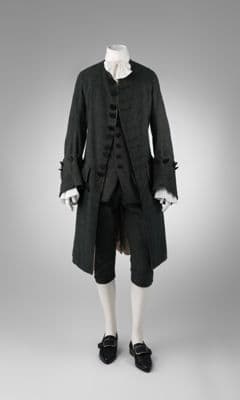
A formal three-piece suit consisting of a dark green wool coat, matching waistcoat, and knee-length breeches. The coat features a fitted bodice with center-front button closure, extending into full skirts that reach mid-thigh. The sleeves are fitted with turned-back cuffs revealing white linen shirt sleeves beneath. A white linen stock is tied at the neck. The waistcoat appears sleeveless and fitted, worn beneath the coat. The breeches are close-fitting and end just below the knee, paired with white stockings and black leather shoes with buckles. This represents the standard formal menswear silhouette of the mid-18th century, emphasizing a refined, aristocratic appearance through precise tailoring and quality wool construction.
Follow this garment wherever the graph leads
These two suits reveal how 18th-century masculine elegance evolved from French excess to British restraint while keeping the same architectural bones. The brown brocade blazes with metallic embroidery that cascades down the coat fronts and cuff edges like liquid gold, while the green wool version strips away all ornament except for the essential buttons, yet both maintain that crucial Rococo silhouette: fitted torso, flared skirts, and knee-length breeches.
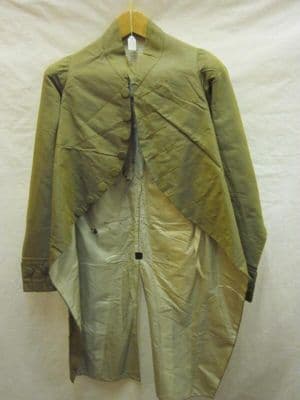
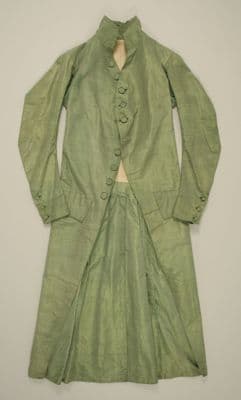
These two coats reveal how French court fashion rippled across Europe in waves, each culture translating Versailles' visual language through its own lens. The Italian silk coat catches light like water with its lustrous taffeta and that distinctive curved front opening, while the British wool version translates the same silhouette into something more stolid—same theatrical proportions and button stance, but rendered in matte fabric that whispers rather than shimmers.
These two pieces reveal how French court fashion colonized European men's dress in the 18th century, but with telling national differences. The British suit embraces Rococo formality through its severe construction—that sharp-shouldered coat with its precise button stance and knee-length proportions—while keeping decoration to a minimum, as if good tailoring alone could signal refinement.
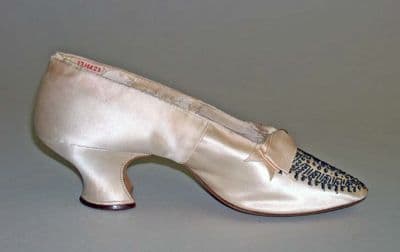
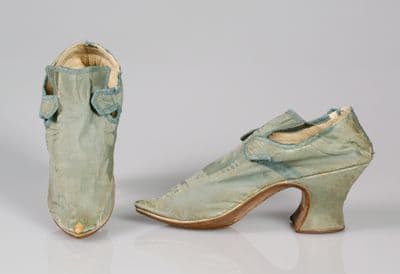
These pieces reveal how Rococo court culture created its own ecosystem of refinement, where even a merchant's wool suit echoes the silk fantasies of Versailles. The pale green shoes, with their delicate damask and those impossibly curved heels, speak the same visual language as the frock coat's measured proportions and subtle tailoring details—both designed for bodies that moved through formal spaces with studied grace.