Rococo · 1760s · French
Production
artisan-craft
Material
silk brocaded satin
Culture
French
Influences
French court fashion · woven-to-shape technique
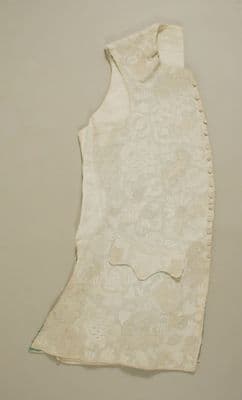
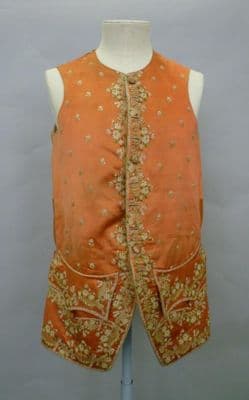
This French gentleman's waistcoat displays the characteristic coral-pink silk ground with elaborate woven brocade patterning in gold and green threads. The garment features a fitted silhouette with a standing collar and front button closure extending from neck to waist. The brocade design incorporates flowing floral motifs with serpentine stems and scattered small flowers across the entire surface. The waistcoat is cut with shaped side seams and features pocket flaps at the hips, also decorated with the same brocade pattern. The construction shows the woven-to-shape technique typical of mid-18th century luxury menswear, where the decorative pattern was specifically designed to follow the garment's contours during the weaving process.


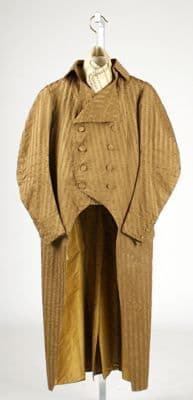
The golden quilted coat's relentless geometry and the coral waistcoat's sinuous botanical embroidery capture fashion's pendulum swing from Rococo excess to Empire restraint. Where the earlier vest revels in asymmetrical flowering vines that seem to grow across the silk, the later ensemble imposes military discipline through its diamond-quilted pattern and severe double-breasted closure.


Follow this garment wherever the graph leads
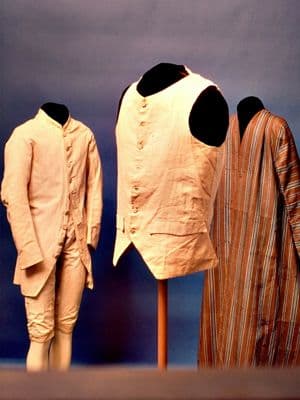
These waistcoats reveal how Rococo's obsession with delicate ornament traveled across the Channel, though filtered through very different sensibilities. The French example revels in silk brocade's inherent luxury—its orange ground blooming with metallic florals that catch light like jewelry—while the British version translates that same decorative impulse into something more restrained: cream linen punctuated by silk embroidery that whispers rather than shouts.
These two waistcoats reveal how rococo's obsession with surface ornament translated across an ocean and a class divide, yet remained surprisingly faithful to its decorative DNA.
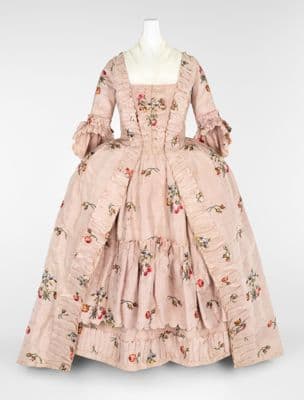
These two garments reveal how Rococo's obsession with delicate florals transcended gender and garment type in 18th-century court dress. The pink silk gown's scattered posies and the waistcoat's dense botanical embroidery both speak the same decorative language—nature domesticated into precious, miniaturized motifs that whisper luxury rather than shout it.
These two pieces reveal how French court fashion colonized European men's dress in the 18th century, but with telling national differences. The British suit embraces Rococo formality through its severe construction—that sharp-shouldered coat with its precise button stance and knee-length proportions—while keeping decoration to a minimum, as if good tailoring alone could signal refinement.