SMITHSONIAN
Jonathan Sheldon's Freedom Suit
Rococo · 1770s · American
Production
handmade
Material
cotton nankeen
Culture
American
Influences
European court dress · English tailoring traditions
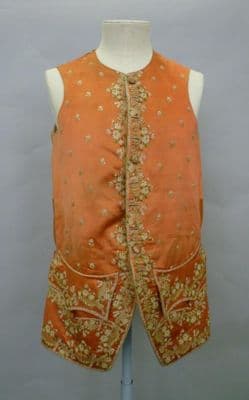
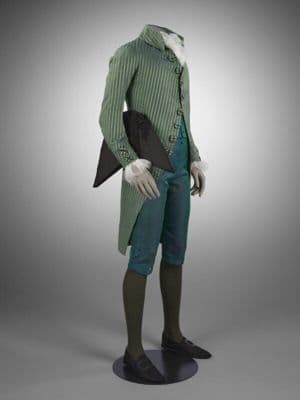
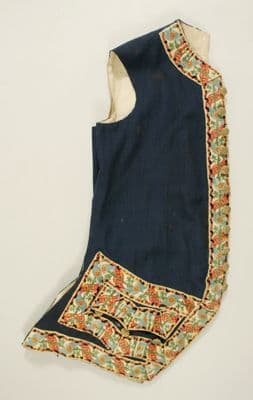
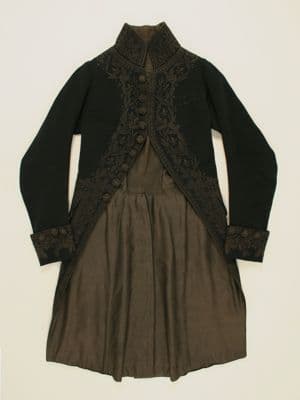
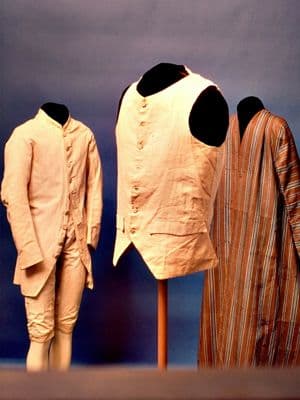
This two-piece suit displays the characteristic silhouette of 1770s menswear with a fitted coat featuring a standing collar, closely-set buttons down the front, and fitted sleeves. The coat appears to have a slightly flared skirt typical of the period. The waistcoat underneath shows the era's preference for layered dressing. The garments are constructed from cotton nankeen, a sturdy yellowish cotton fabric that was popular in colonial America. The tailoring demonstrates precise construction with clean lines and proper proportions. The pale yellow color of the nankeen fabric has likely faded from its original deeper tone. This represents formal menswear of the American colonial period, showing how European fashion trends were adapted using locally available or imported materials in Rhode Island.
jacketregular fithip length
Connected To
Worn with·breechesWorn with·shirtWorn with·stockingsFunction·court-formal
Echoes Across Time
Rococo → Rococo · 60yr70%
SHARED
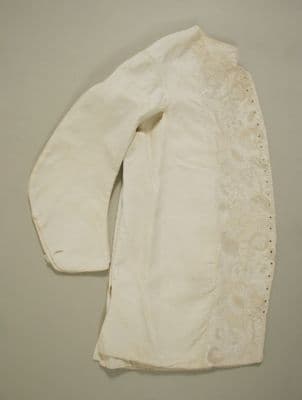
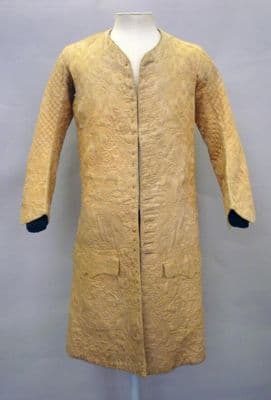
These two garments reveal how quilting traveled from European luxury to American practicality, carrying its visual DNA across an ocean and down the social ladder. The French waistcoat's silk satin catches light in those characteristic diamond patterns that quilting creates, while Sheldon's nankeen suit translates that same puffy, geometric texture into humble cotton—the quilted surface providing warmth and substance to what might otherwise read as workwear.
Worn with·breechesWorn with·shirtWorn with·stockings
Pull the Thread→
Follow this garment wherever the graph leads