Rococo · 1710s · French
Production
handmade
Material
silk satin
Culture
French
Influences
justaucorps coat styling · quilted doublet tradition
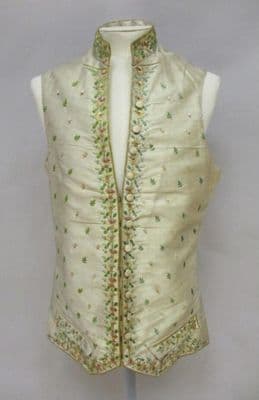
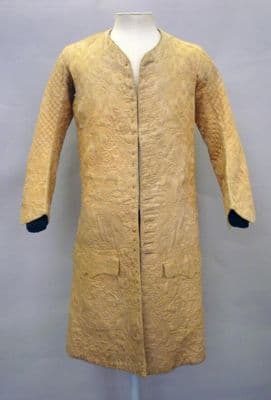
This sleeved waistcoat displays the characteristic long-skirted silhouette of early 18th-century menswear, extending to mid-thigh length. The golden yellow silk satin is quilted in an all-over diamond pattern, creating both visual texture and insulation. The garment features a fitted bodice that flares into a full skirt, typical of the transitional period when waistcoats were evolving from coat-like garments. Navy blue cuffs provide color contrast and likely indicate rank or fashion preference. The center-front closure uses closely-spaced buttons, and the quilted construction demonstrates the period's emphasis on both luxury and practicality in men's formal dress.


These waistcoats reveal how male formality calcified over 160 years: the French rococo piece sprawls in quilted amber silk like a gentleman's dressing gown, its languid length and soft construction speaking to an era when men's bodies could be as decorative as women's.

Follow this garment wherever the graph leads
These waistcoats reveal how male formality calcified over 160 years: the French rococo piece sprawls in quilted amber silk like a gentleman's dressing gown, its languid length and soft construction speaking to an era when men's bodies could be as decorative as women's.
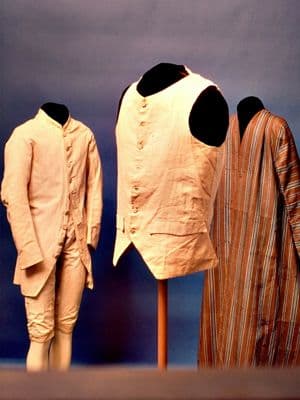
These two garments reveal how quilting traveled from European luxury to American practicality, carrying its visual DNA across an ocean and down the social ladder. The French waistcoat's silk satin catches light in those characteristic diamond patterns that quilting creates, while Sheldon's nankeen suit translates that same puffy, geometric texture into humble cotton—the quilted surface providing warmth and substance to what might otherwise read as workwear.
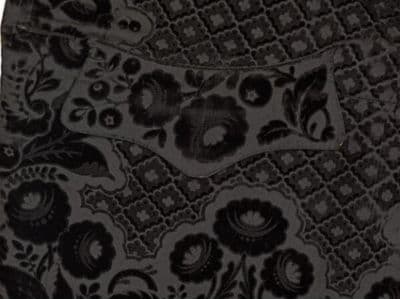
That golden quilted coat and the black velvet waistcoat represent two faces of 18th-century masculine luxury, separated by decades but united in their devotion to surface texture as status symbol. The French piece relies on quilting's dimensional play—those puffy channels catching light like armor made of silk—while the British example achieves richness through velvet's light-eating nap and what appears to be intricate floral brocading or cut-work.
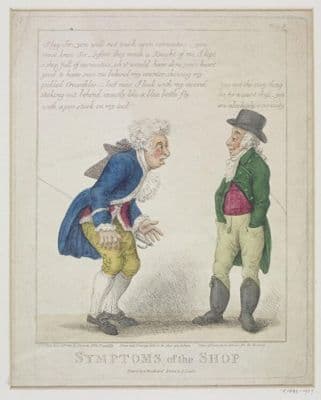
The quilted golden silk of this 18th-century waistcoat and the blue tailcoat in this Regency-era satirical print share the DNA of masculine formality, but the satire reveals how drastically that formality had shifted.

These two garments reveal how quilting traveled from European luxury to American practicality, carrying its visual DNA across an ocean and down the social ladder. The French waistcoat's silk satin catches light in those characteristic diamond patterns that quilting creates, while Sheldon's nankeen suit translates that same puffy, geometric texture into humble cotton—the quilted surface providing warmth and substance to what might otherwise read as workwear.