Rococo · 1750s · British
Production
artisan-craft
Material
silk velvet
Culture
British
Influences
French silk weaving traditions
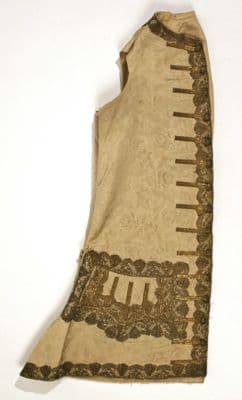
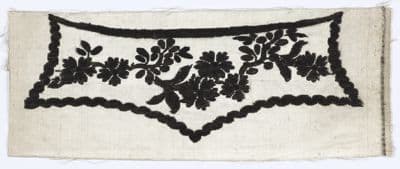
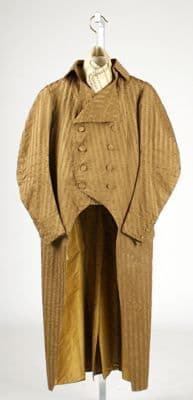
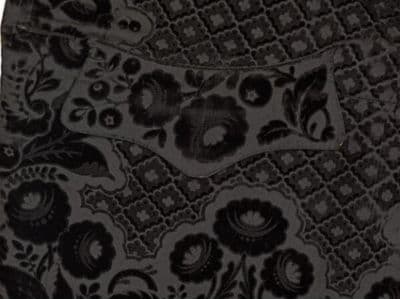
This mid-18th century gentleman's waistcoat displays the sophisticated textile artistry of the Rococo period. The black silk velvet ground features an elaborate woven pattern combining geometric diamond lattice work with naturalistic floral motifs including roses and foliage. The fabric appears to be woven-to-shape, a luxury technique where the pattern is integrated during the weaving process rather than applied afterward. The dense, plush pile of the velvet creates rich textural contrast between the raised floral elements and the recessed geometric background. This type of ornate patterned velvet was characteristic of formal menswear during the 1750s-60s, when waistcoats served as the primary decorative element of a gentleman's ensemble, worn beneath a plain coat.
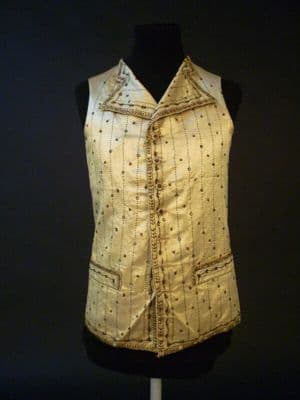
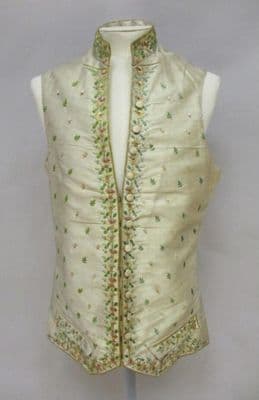
These two waistcoats reveal how 18th-century menswear could telegraph wealth through radically different strategies of excess. The earlier cream silk piece flaunts its luxury through shimmering brocade and elaborate trim—a peacock's approach to prosperity—while the later black velvet version whispers its expense through the technical marvel of woven-to-shape construction and those densely quilted floral motifs that catch light like a secret.
These waistcoats reveal how men's formal dress clung to the same decorative impulses across more than a century, even as the execution evolved from baroque exuberance to Victorian restraint. The earlier black velvet piece revels in its woven-to-shape florals—roses and leaves that seem to grow directly from the silk in a technique that was both showoff-y and structurally ingenious.


Follow this garment wherever the graph leads
These waistcoats reveal how men's formal dress clung to the same decorative impulses across more than a century, even as the execution evolved from baroque exuberance to Victorian restraint. The earlier black velvet piece revels in its woven-to-shape florals—roses and leaves that seem to grow directly from the silk in a technique that was both showoff-y and structurally ingenious.
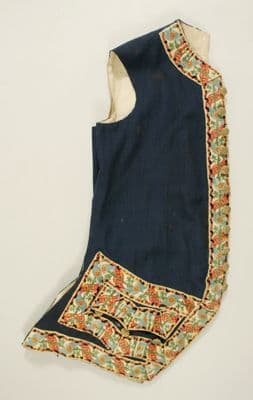
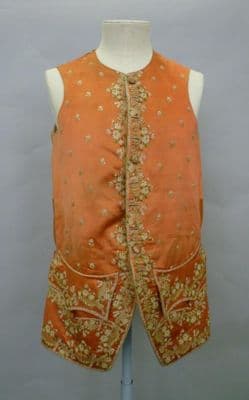
These two waistcoats reveal how the same Rococo impulse toward ornamental excess could manifest in radically different national temperaments. The French example revels in its orange silk brocade scattered with delicate florals, its front edges dripping with metallic trim that catches light like jewelry, while the British piece achieves equal drama through restraint—black silk velvet woven with a bold floral pattern that emerges from shadow like a garden at midnight.
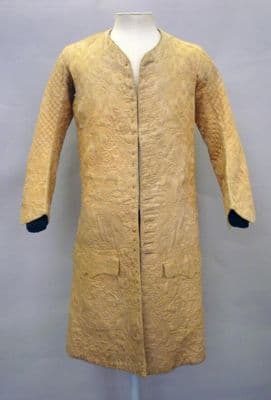
That golden quilted coat and the black velvet waistcoat represent two faces of 18th-century masculine luxury, separated by decades but united in their devotion to surface texture as status symbol. The French piece relies on quilting's dimensional play—those puffy channels catching light like armor made of silk—while the British example achieves richness through velvet's light-eating nap and what appears to be intricate floral brocading or cut-work.