Romantic · 1820s · Italian
Production
handmade
Material
wool
Culture
Italian
Influences
Empire period military uniform styling
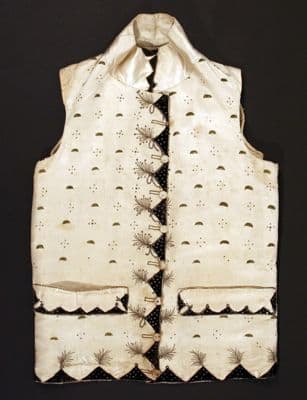
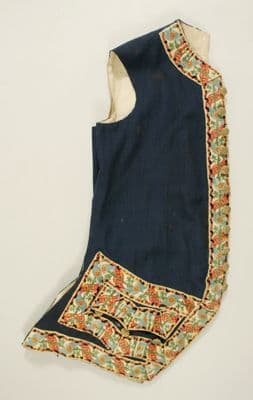
A sleeveless wool waistcoat designed for household livery service, featuring a deep navy blue body with elaborate decorative trim along the front edges and hem. The garment displays intricate woven or embroidered bands in red, gold, and green forming geometric and floral patterns typical of early 19th century Italian decorative arts. The waistcoat has a high neckline and fitted silhouette that would have been worn over a shirt and under a coat. The ornamental borders demonstrate the period's emphasis on hierarchical dress codes, where servants' uniforms displayed their employers' wealth and status through rich materials and detailed ornamentation.


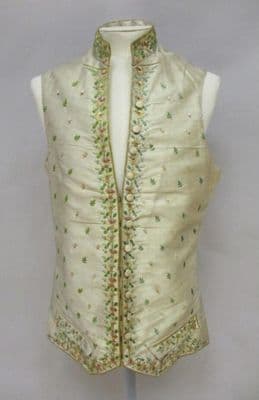
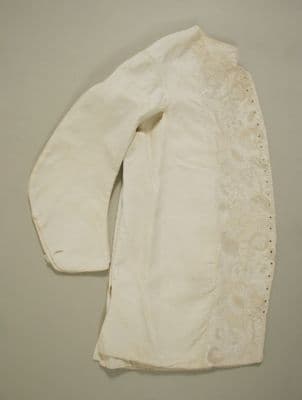
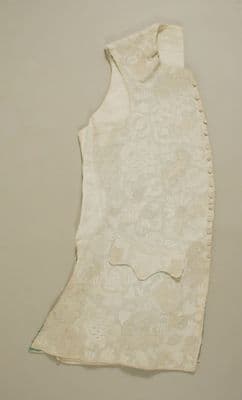
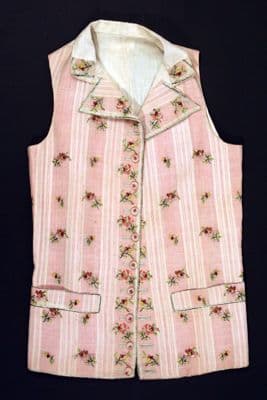
These waistcoats reveal how male finery evolved from theatrical display to restrained luxury across fifty years of European fashion. The navy livery piece flaunts its decorative intent with that bold floral border cascading down the front and hemline—embroidery as pure ornament, designed to catch the eye across a ballroom. By contrast, the ivory waistcoat whispers its wealth through tiny scattered motifs and delicate trim, the embroidery so fine it reads almost as texture rather than pattern.
Follow this garment wherever the graph leads
These waistcoats reveal how male finery evolved from theatrical display to restrained luxury across fifty years of European fashion. The navy livery piece flaunts its decorative intent with that bold floral border cascading down the front and hemline—embroidery as pure ornament, designed to catch the eye across a ballroom. By contrast, the ivory waistcoat whispers its wealth through tiny scattered motifs and delicate trim, the embroidery so fine it reads almost as texture rather than pattern.
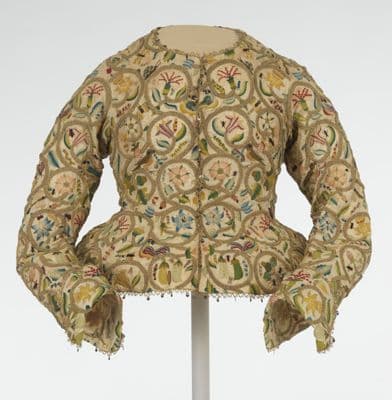
That olive Jacobean jacket and the navy livery waistcoat are separated by two centuries but united by the same aristocratic impulse: using embroidered ornament to broadcast status through sheer labor costs. The earlier piece drowns its wearer in a garden of silk threads worked into every available surface, while the later waistcoat deploys its floral borders more strategically, framing the body rather than consuming it.
These waistcoats reveal how embellishment migrated from understated gentility to theatrical display across the late 18th and early 19th centuries. The cream linen piece whispers its refinement through delicate white-on-white embroidery that traces the button band like a gentleman's secret—elegant restraint that spoke volumes in Rococo society.
These waistcoats reveal how menswear's decorative impulse survived the great masculine renunciation, just in different hands. The cream rococo piece, with its delicate silk florals scattered like a garden party across linen, represents the last gasp of aristocratic male plumage—when gentlemen could dress as prettily as their wives.


That olive Jacobean jacket and the navy livery waistcoat are separated by two centuries but united by the same aristocratic impulse: using embroidered ornament to broadcast status through sheer labor costs. The earlier piece drowns its wearer in a garden of silk threads worked into every available surface, while the later waistcoat deploys its floral borders more strategically, framing the body rather than consuming it.