THE MET
Cream Silk Brocade Fitted Formal Waistcoat
Rococo · 1750s-1760s · French
Production
handmade
Material
silk brocade
Culture
French
Influences
18th-century court dress · French decorative arts
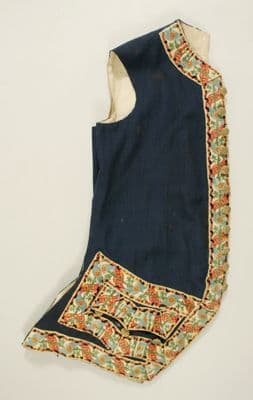
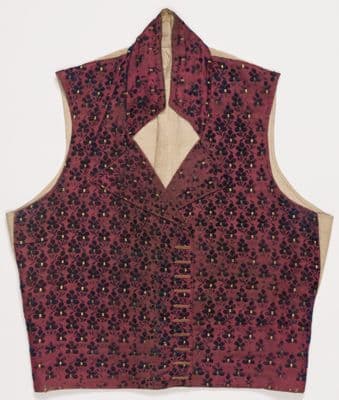
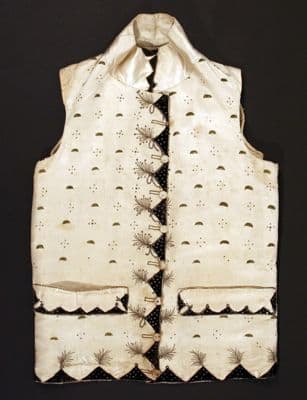
This formal waistcoat displays characteristic Rococo construction with a fitted silhouette that would sit close to the torso. The cream silk brocade features an all-over pattern of small floral or geometric motifs woven in gold thread. The front edges are finished with elaborate scalloped trim in a zigzag pattern, creating decorative borders along the opening and hem. Multiple rows of small round buttons run down the center front, likely covered in matching silk. The garment shows typical 18th-century tailoring with shaped side seams and a standing collar. The brocade's lustrous surface and intricate weaving demonstrate the luxury textile production of the period, while the scalloped edging reflects the Rococo taste for ornamental detail.
vesttight fithip length
Connected To
Worn with·breechesWorn with·coatWorn with·shirt
SHAREDsame era · cross-culture
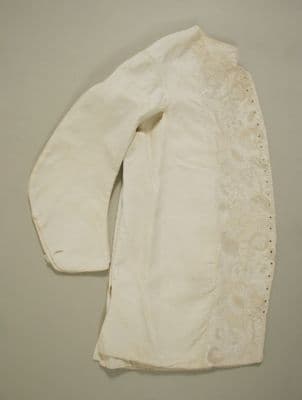
Both waistcoats speak the same 18th-century language of masculine refinement, but with distinctly different accents. The French silk version flaunts its wealth through elaborate brocade and metallic thread embroidery, while the British linen piece achieves elegance through restraint—relying on crisp tailoring, subtle eyelet work, and those perfectly scalloped edges that frame the torso like architectural molding.
Echoes Across Time
Rococo → Baroque · 40yr65%
SHARED
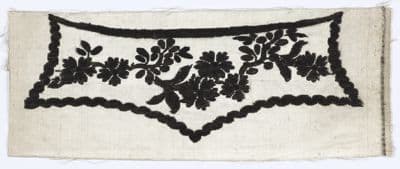
These two pieces reveal how 18th-century French court dress evolved its decorative language while keeping the same aristocratic DNA. The cream silk waistcoat's delicate scattered florals—those tiny repeated motifs dotting the fabric like expensive confetti—gave way to the bolder theatrical gesture of the velvet appliqué pocket, where black botanical forms sprawl across cream silk with Baroque drama.
Worn with·breechesWorn with·coatFunction·court-formal
Pull the Thread→
Follow this garment wherever the graph leads