SMITHSONIAN
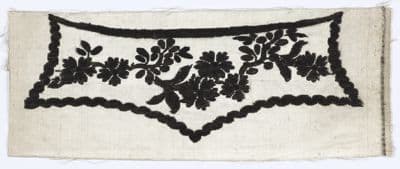
Black Velvet Appliqué Cream Silk Waistcoat Pocket
Baroque · 1700s · French
Production
handmade
Material
silk velvet
Culture
French
Influences
Rococo decorative arts · French court fashion
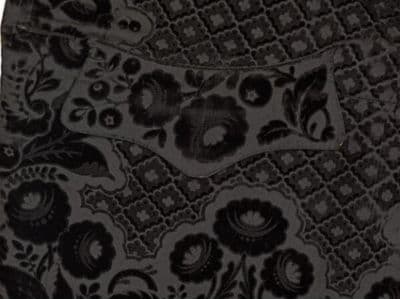
A triangular waistcoat pocket flap crafted from cream silk with black silk velvet appliqué work. The design features an elaborate floral motif with large blooms and foliage arranged symmetrically across the pointed flap. The black velvet creates bold contrast against the light ground fabric, with scalloped edges defining the border. This type of decorative pocket treatment was typical of 18th-century men's formal waistcoats, where such ornamental details demonstrated wealth and refined taste. The floral pattern reflects Rococo sensibilities with its naturalistic yet stylized botanical forms.
vesttight fitabove-the-hip
Connected To
75%
Influences·French court fashionWorn with·breechesWorn with·coatFunction·court-formal
SHARED170 years · cross-culture
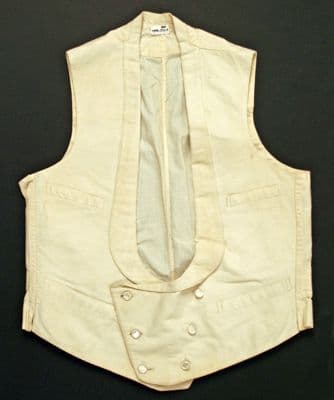
The baroque pocket's bold velvet appliqué and the Victorian waistcoat's delicate embroidered sprigs are separated by 170 years, yet they're both playing the same game of aristocratic restraint—decoration that whispers rather than shouts. Where the French piece uses dramatic black-on-cream contrast in sweeping floral motifs, the British waistcoat opts for tonal ivory-on-ivory subtlety, each tiny flower placed with the precision of a jeweler.
Text77%
Influences·French court fashionWorn with·breechesWorn with·coat
SHARED40 years · cross-culture
These two waistcoat fragments reveal how French court embellishment traveled and evolved across decades and borders. The earlier French piece deploys bold black velvet appliqué in baroque swags—those confident, almost architectural curves that announce wealth through sheer material contrast.
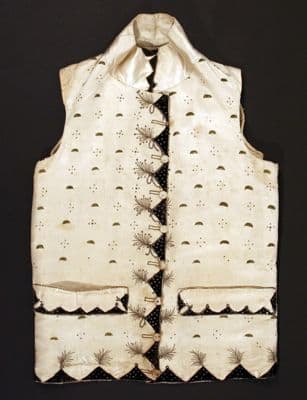
Worn with·breechesWorn with·coatFunction·court-formal
SHARED40 years
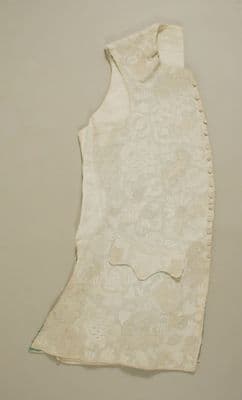
These two pieces reveal how 18th-century French court dress evolved its decorative language while keeping the same aristocratic DNA. The cream silk waistcoat's delicate scattered florals—those tiny repeated motifs dotting the fabric like expensive confetti—gave way to the bolder theatrical gesture of the velvet appliqué pocket, where black botanical forms sprawl across cream silk with Baroque drama.
62%
Worn with·breechesWorn with·coat
SHARED50 years · cross-culture
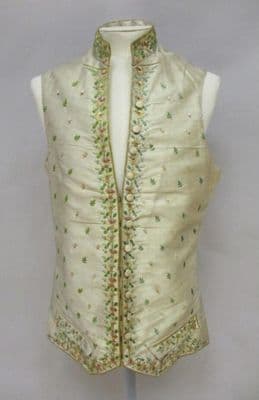
That swooping floral motif on the French waistcoat pocket and the sinuous botanical patterns woven into the British vest reveal how nature became the lingua franca of 18th-century masculine luxury.
Echoes Across Time
Baroque → Victorian Late / Bustle · 170yr75%
SHARED
The baroque pocket's bold velvet appliqué and the Victorian waistcoat's delicate embroidered sprigs are separated by 170 years, yet they're both playing the same game of aristocratic restraint—decoration that whispers rather than shouts. Where the French piece uses dramatic black-on-cream contrast in sweeping floral motifs, the British waistcoat opts for tonal ivory-on-ivory subtlety, each tiny flower placed with the precision of a jeweler.
Influences·French court fashionWorn with·breechesWorn with·coat
Pull the Thread→
Follow this garment wherever the graph leads