SMITHSONIAN
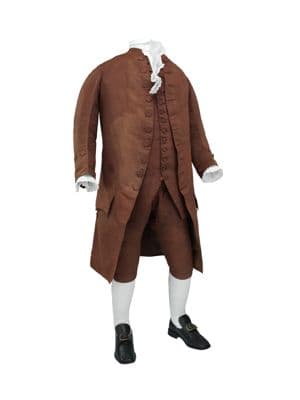
Franklin's Suit
Rococo · 1770s · British
Production
handmade
Material
silk
Culture
British
Influences
18th-century court dress · English tailoring tradition
A complete three-piece gentleman's suit consisting of a long-skirted coat, waistcoat, and breeches in brown silk. The coat features a fitted bodice with center-front button closure, extending to mid-thigh length with full skirts that flare from the waist. The sleeves are fitted with turned-back cuffs revealing white linen shirt sleeves beneath. A matching waistcoat is visible underneath, and knee-length breeches complete the ensemble. White stockings and black leather shoes with buckles finish the look. The construction demonstrates typical 18th-century tailoring with precise fitting through the torso and structured shaping.
coatregular fitknee length
Connected To
Worn with·breechesWorn with·stockingsWorn with·waistcoat
SHARED30 years · cross-culture · cross-category
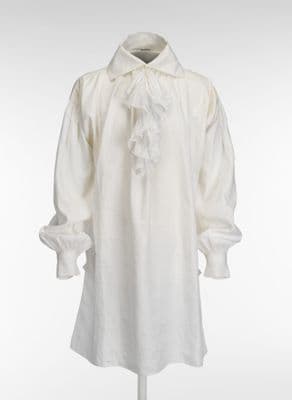
The frothy cascade of ruffles at the throat of that cream linen shirt finds its echo in the white jabot spilling from Franklin's brown silk coat—both men performing the same rococo theater of masculine refinement through calculated excess at the neck.
Text73%
Image72%
Entity
Influences·18th-century court dress
SHARED210 years · cross-category
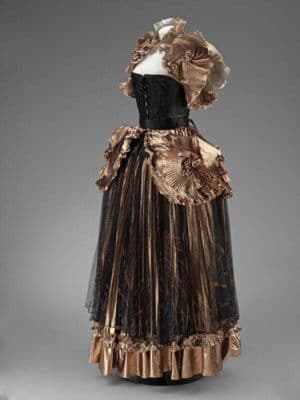
The brown silk suit's restrained elegance—that clean line of covered buttons marching down the front, the precise tailoring that shaped the 18th-century gentleman—finds its theatrical descendant in the 1980s gown's chocolate-and-gold excess. Where Franklin's contemporaries wore their status in subtle wool and silk, the New Romantic era exploded that same courtly DNA into pure costume: the gown's stiff bodice and cascading ruffles are 18th-century court dress run through a glam rock filter.
Worn with·breechesWorn with·waistcoat
SHARED70 years · cross-culture · cross-category
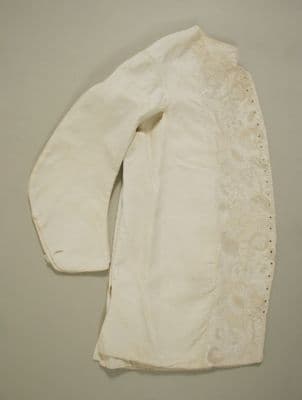
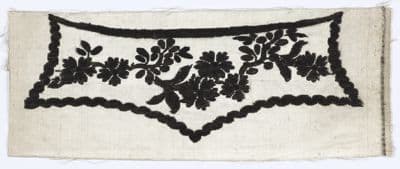
That brown silk suit carries the ghost of aristocratic excess in its careful restraint—the same decorative impulse that once drove men to embroider their waistcoat pockets with black velvet florals, now channeled into rows of self-covered buttons and the subtle theater of a perfectly cut skirt coat. The waistcoat pocket's baroque swags have been distilled into the suit's architectural lines, trading overt ornament for the more coded luxury of proportion and finish.
Worn with·breechesWorn with·stockings
SHARED30 years · cross-category
Both garments speak the same 18th-century language of masculine refinement, but the waistcoat whispers where Franklin's coat announces. The cream linen waistcoat, with its delicate eyelet embroidery marching down the front edges, represents the intimate layer of Rococo elegance—the piece that revealed a gentleman's true taste when he shed his outer coat in private company.
Echoes Across Time
Rococo → 1980s · 210yr64%
SHARED
The brown silk suit's restrained elegance—that clean line of covered buttons marching down the front, the precise tailoring that shaped the 18th-century gentleman—finds its theatrical descendant in the 1980s gown's chocolate-and-gold excess. Where Franklin's contemporaries wore their status in subtle wool and silk, the New Romantic era exploded that same courtly DNA into pure costume: the gown's stiff bodice and cascading ruffles are 18th-century court dress run through a glam rock filter.
Influences·18th-century court dress
Rococo → Baroque
Pull the Thread→
Follow this garment wherever the graph leads