THE MET
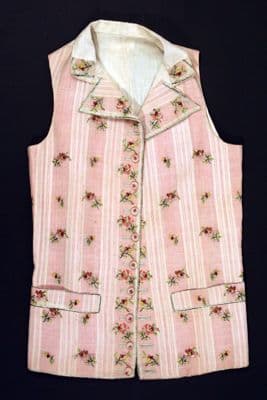
Pale Pink Cotton Gentleman's Waistcoat with Green Cream Details
Neoclassical Transition · 1780s · British
Production
handmade
Material
cotton
Culture
British
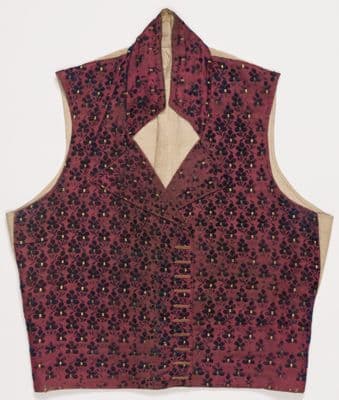
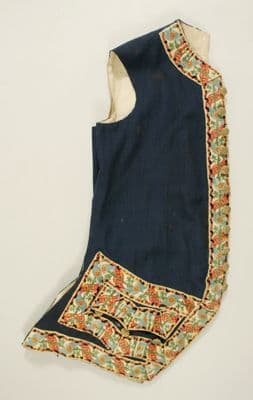
This gentleman's waistcoat displays the refined tailoring characteristic of late 18th-century menswear. The pale pink cotton ground features delicate vertical stripes created through the weave structure. Small-scale floral sprigs in muted greens and browns are scattered across the surface in an all-over pattern. The garment is cut with a fitted silhouette that would have followed the natural waistline, featuring a standing collar with notched lapels that fold back to reveal cream-colored silk lining. The front closure shows a series of small buttons, likely covered in matching fabric. Two welted pockets sit at the waist level. The construction demonstrates skilled tailoring with precise seaming and careful pattern matching at the center front opening.
vesttight fitv-neckhip length
Connected To
70%
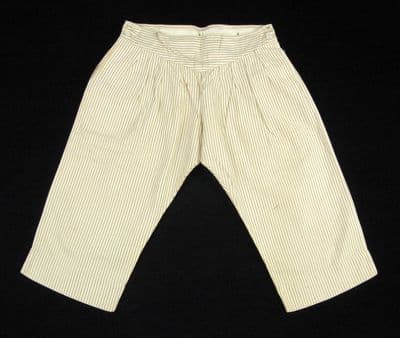
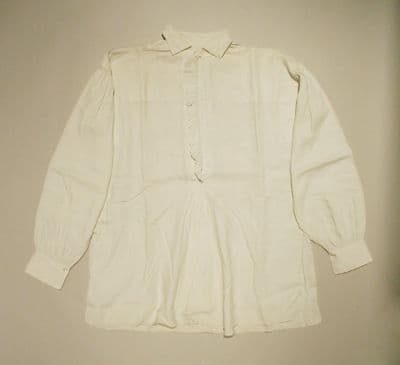
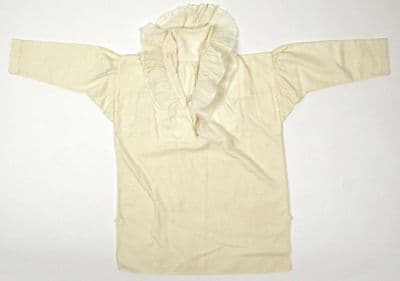
Worn with·breechesWorn with·coatWorn with·shirt
SHARED40 years
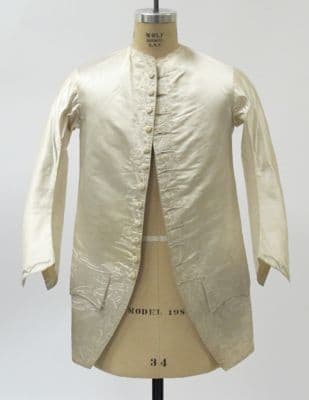
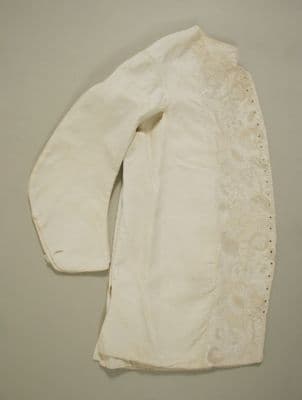
These two waistcoats reveal how 18th-century menswear shifted from rococo extravagance to neoclassical restraint while maintaining the same essential silhouette. The earlier cream linen vest relies on pure texture—quilted channels and tiny decorative buttons marching down the front—for its quiet luxury, while the later pink cotton piece tells its story through scattered floral sprigs that feel almost feminine against the pinstriped ground.
Echoes Across Time
Neoclassical Transition → Rococo · 40yr70%
SHARED
These two waistcoats reveal how 18th-century menswear shifted from rococo extravagance to neoclassical restraint while maintaining the same essential silhouette. The earlier cream linen vest relies on pure texture—quilted channels and tiny decorative buttons marching down the front—for its quiet luxury, while the later pink cotton piece tells its story through scattered floral sprigs that feel almost feminine against the pinstriped ground.
Worn with·breechesWorn with·coatWorn with·shirt
Pull the Thread→
Follow this garment wherever the graph leads