Rococo · 1780s · European
Production
handmade
Material
silk brocade
Culture
European
Influences
French court dress · silk weaving traditions
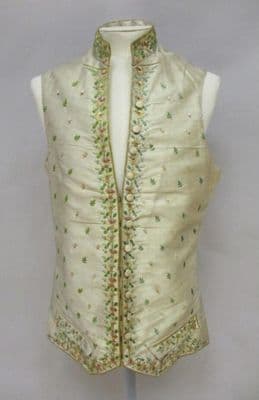
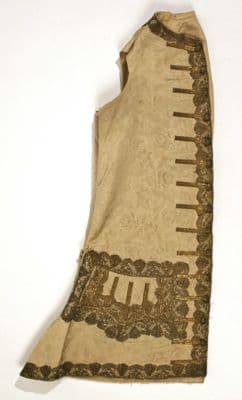
This gentleman's waistcoat displays the characteristic construction of mid-18th century formal menswear. The garment features a fitted silhouette that would have extended to the hip, with a straight front edge and curved side seams. The cream-colored silk brocade shows a woven floral pattern in gold threads. Brown silk trim edges the garment, creating decorative tabs along the front opening and forming geometric border patterns at the hem and pocket areas. The construction shows precise tailoring with multiple small fabric-covered buttons that would have fastened the front. The waistcoat demonstrates the Rococo period's preference for ornate textiles and decorative detailing in masculine formal dress.


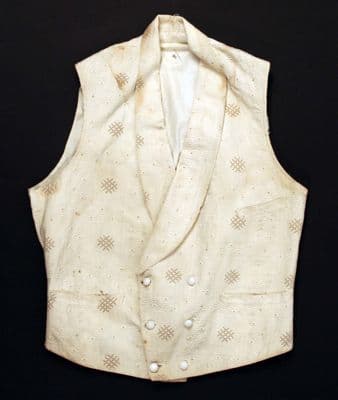
These waistcoats reveal how male court dress clung to its decorative DNA across a century of upheaval. The earlier rococo piece flaunts its gold brocade like armor made of sunlight, while the Victorian version translates that same impulse into delicate embroidered sprigs—both refusing the creeping sobriety that would eventually neuter men's fashion.
Follow this garment wherever the graph leads
These waistcoats reveal how male court dress clung to its decorative DNA across a century of upheaval. The earlier rococo piece flaunts its gold brocade like armor made of sunlight, while the Victorian version translates that same impulse into delicate embroidered sprigs—both refusing the creeping sobriety that would eventually neuter men's fashion.
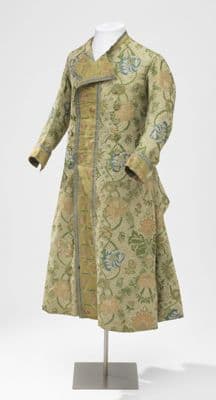
These two garments reveal how 18th-century men's fashion operated on a spectrum of formality, both deploying silk brocade's inherent luxury but for entirely different social performances. The waistcoat's crisp geometric trim and fitted silhouette speak to the public theater of court dress, while the dressing gown's flowing lines and all-over floral pattern suggest the more relaxed intimacy of private chambers—yet both required the same expensive weaving techniques and precious materials.
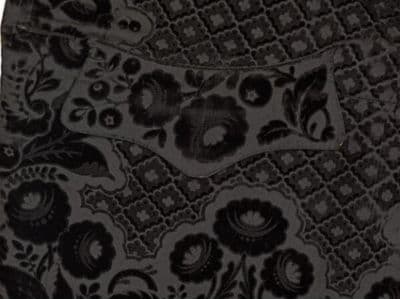
These two waistcoats reveal how 18th-century menswear could telegraph wealth through radically different strategies of excess. The earlier cream silk piece flaunts its luxury through shimmering brocade and elaborate trim—a peacock's approach to prosperity—while the later black velvet version whispers its expense through the technical marvel of woven-to-shape construction and those densely quilted floral motifs that catch light like a secret.
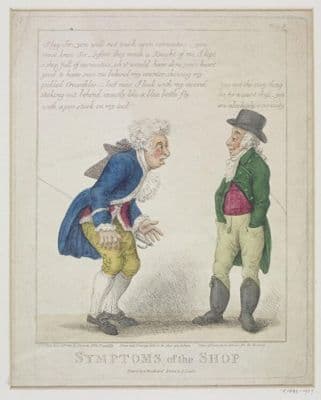
The cream silk waistcoat with its elaborate gold brocade and serpentine trim speaks the same decorative language as the blue tailcoat in the satirical print, but they're separated by a revolution in taste that made the earlier garment's opulence suddenly ridiculous.


These two garments reveal how 18th-century men's fashion operated on a spectrum of formality, both deploying silk brocade's inherent luxury but for entirely different social performances. The waistcoat's crisp geometric trim and fitted silhouette speak to the public theater of court dress, while the dressing gown's flowing lines and all-over floral pattern suggest the more relaxed intimacy of private chambers—yet both required the same expensive weaving techniques and precious materials.